
 kdolu
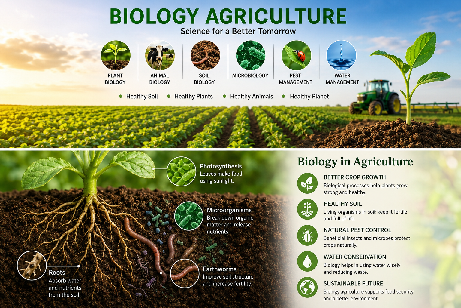
kdolu Biology agriculture is changing the way people grow food. Today, farmers use biology to grow healthier crops, protect nature, and produce more food with fewer chemicals. As a result, farms become more productive while keeping the environment safe.
Moreover, biology agriculture helps farmers understand plants, animals, soil, bacteria, fungi, insects, and ecosystems. Because everything in nature works together, good biological knowledge leads to healthier farms and better harvests.
Whether you are a student, gardener, farmer, researcher, or simply curious about farming, this guide explains biology agriculture in simple English. Every section uses easy words so even an eleven-year-old can understand.
What Is Biology Agriculture?
Biology agriculture is the study of how living things help agriculture. It combines biology with farming practices to improve food production naturally.
In simple words, biology explains how plants grow, how animals stay healthy, and how tiny organisms improve soil.
For example, healthy soil contains millions of bacteria and fungi. These tiny living things help plants absorb nutrients. Therefore, farmers who understand biology often grow stronger crops.
Biology agriculture includes:
- Plant science
- Animal science
- Soil science
- Microbiology
- Ecology
- Genetics
- Biotechnology
- Sustainable farming
All these subjects work together to produce safe and healthy food.
Why Biology Agriculture Is Important
Biology agriculture helps solve many farming problems.
For example, farmers often face:
- Poor soil
- Plant diseases
- Insect attacks
- Water shortages
- Climate change
However, biological knowledge offers natural solutions.
Benefits include:
- Better crop production
- Healthy livestock
- Rich soil
- Less pollution
- Safe food
- Lower farming costs
- Better biodiversity
As a result, both farmers and consumers benefit.
History of Biology Agriculture
People have practiced agriculture for more than 10,000 years. At first, farmers learned by watching nature.
Later, scientists began studying plants and animals.
Important discoveries changed farming forever.
Early Farming
Thousands of years ago, people selected healthy seeds.
Therefore, crops slowly became stronger.
Scientific Farming
During the 1800s, scientists discovered:
- Plant nutrition
- Soil nutrients
- Plant diseases
- Fertilizers
- Genetics
These discoveries improved farming.
Modern Biology Agriculture
Today, biology agriculture includes:
- DNA research
- Biological fertilizers
- Beneficial insects
- Biofertilizers
- Tissue culture
- Precision farming
Consequently, farming has become more efficient than ever before.
Biology and Farming Connection
Every farm depends on biology.
Plants grow because of biological processes.
Animals reproduce through biology.
Soil remains healthy because of living organisms.
Even rainforests, rivers, insects, and birds affect agriculture.
Therefore, biology is the foundation of farming.
Living Things Found on Farms
A farm is full of living organisms.
These include:
| Living Thing | Importance |
| Plants | Produce food |
| Animals | Milk, meat, eggs |
| Earthworms | Improve soil |
| Bees | Pollination |
| Butterflies | Pollination |
| Bacteria | Nutrient cycling |
| Fungi | Soil health |
| Birds | Pest control |
| Fish | Aquaculture |
| Humans | Farm management |
Each organism plays a different role.
Biology Agriculture and Plant Biology
Plants are the heart of agriculture.
Without healthy plants, food production stops.
Plant biology explains:
- Growth
- Reproduction
- Photosynthesis
- Nutrient movement
- Disease resistance
Therefore, farmers study plant biology carefully.
Parts of a Plant
Every plant has important parts.
Roots
Roots absorb:
- Water
- Minerals
- Nutrients
Moreover, roots hold plants firmly in the soil.
Stem
The stem supports the plant.
It also transports water and food.
Leaves
Leaves produce food through photosynthesis.
Consequently, healthy leaves mean healthy crops.
Flowers
Flowers produce seeds.
Many fruits begin as flowers.
Fruits
Fruits protect seeds.
They also help spread seeds.
Biology Agriculture and Animal Biology
Animals play a major role in farming.
Examples include:
- Cows
- Chickens
- Goats
- Sheep
- Ducks
- Fish
Farmers use biology to understand:
- Nutrition
- Growth
- Reproduction
- Health
- Disease prevention
As a result, livestock stays productive.
Importance of Healthy Animals
Healthy animals provide:
- More milk
- Better meat
- More eggs
- Strong offspring
- Higher farm income
Therefore, animal biology supports successful farming.
Soil Biology Explained
Many people think soil is just dirt.
Actually, soil is alive.
Healthy soil contains:
- Bacteria
- Fungi
- Earthworms
- Insects
- Organic matter
These living organisms improve plant growth.
Why Soil Biology Matters
Healthy soil:
- Holds water
- Stores nutrients
- Supports roots
- Reduces erosion
- Improves crop yield
Therefore, farmers protect soil carefully.
Biology Agriculture and Microorganisms
Tiny organisms are invisible without a microscope.
However, they perform huge jobs.
Important microorganisms include:
- Rhizobium bacteria
- Mycorrhizal fungi
- Nitrogen-fixing bacteria
- Decomposers
These organisms improve soil naturally.
Nitrogen-Fixing Bacteria
Plants need nitrogen.
However, they cannot use nitrogen directly from the air.
Special bacteria convert nitrogen into usable forms.
Consequently, plants grow faster.
Legumes like beans and peas benefit greatly.
Helpful Fungi
Some fungi help plant roots.
These fungi increase water absorption.
Additionally, they improve nutrient uptake.
As a result, crops survive drought better.
Photosynthesis in Biology Agriculture
Photosynthesis is one of the most important biological processes.
Plants make food using:
- Sunlight
- Water
- Carbon dioxide
They produce:
- Sugar
- Oxygen
Without photosynthesis, farming would not exist.
Factors Affecting Photosynthesis
Several factors affect plant growth.
These include:
- Light
- Temperature
- Water
- Carbon dioxide
- Nutrients
Farmers manage these carefully.
Therefore, crops grow better.
Plant Nutrition in Biology Agriculture
Plants need nutrients just like humans.
There are two groups.
Macronutrients
Plants require:
- Nitrogen
- Phosphorus
- Potassium
- Calcium
- Magnesium
- Sulfur
These nutrients support healthy growth.
Micronutrients
Plants also need:
- Zinc
- Iron
- Copper
- Boron
- Manganese
Although plants need smaller amounts, these nutrients remain essential.
Crop Genetics in Biology Agriculture
Genetics studies how traits pass from parents to offspring.
Scientists use genetics to develop:
- Disease-resistant crops
- High-yield varieties
- Drought-resistant plants
- Pest-resistant crops
Consequently, food production increases.
Why Genetics Helps Farmers
Good genetics means:
- Better harvests
- Less crop loss
- Improved quality
- Higher profits
Therefore, many breeding programs focus on genetics.
Plant Cells Explained
Every plant is made of tiny cells.
Each cell performs special jobs.
Important parts include:
| Cell Part | Function |
| Cell Wall | Protection |
| Cell Membrane | Controls movement |
| Nucleus | Controls activities |
| Chloroplast | Photosynthesis |
| Vacuole | Water storage |
Together, these parts keep plants alive.
Plant Reproduction
Plants reproduce in two main ways.
Sexual Reproduction
Flowers produce seeds.
Seeds grow into new plants.
Asexual Reproduction
Farmers use:
- Cuttings
- Grafting
- Tubers
- Bulbs
This method produces identical plants.
Seed Biology
Seeds contain new life.
Every healthy seed includes:
- Seed coat
- Embryo
- Food storage
When seeds receive:
- Water
- Oxygen
- Warmth
They begin germination.
Eventually, seedlings become mature crops.
In this first part, you learned that biology agriculture is the science behind successful farming. You explored how plant biology, animal biology, soil organisms, microorganisms, photosynthesis, nutrients, genetics, plant cells, reproduction, and seed biology all work together to produce healthy crops and livestock. Understanding these basics helps farmers improve yields while protecting the environment.
Biology Agriculture and Plant Diseases
Plant diseases reduce crop production every year. However, farmers can prevent many diseases by understanding biology.
Plants become sick because of:
- Fungi
- Bacteria
- Viruses
- Nematodes
- Poor growing conditions
Therefore, early detection is very important.
Common Plant Diseases
| Disease | Cause | Affected Crops |
| Powdery Mildew | Fungus | Wheat, cucumber |
| Rust | Fungus | Wheat |
| Late Blight | Fungus-like organism | Potato, tomato |
| Bacterial Wilt | Bacteria | Tomato |
| Mosaic Disease | Virus | Many vegetables |
Moreover, healthy soil reduces disease naturally.
Biology Agriculture and Biological Pest Control
Many insects damage crops.
However, not all insects are harmful.
Some insects naturally kill crop pests.
This method is called biological pest control.
Examples include:
- Ladybugs eat aphids.
- Lacewings eat soft-bodied insects.
- Parasitic wasps attack harmful caterpillars.
- Praying mantises feed on many pests.
As a result, farmers use fewer chemical pesticides.
Why Biological Pest Control Matters
- Protects beneficial insects
- Keeps soil healthy
- Reduces chemical pollution
- Saves money over time
- Produces safer food
Biology Agriculture and Pollination
Pollination is one of nature’s greatest gifts.
Without pollination, many crops cannot produce fruits or seeds.
Important pollinators include:
- Bees
- Butterflies
- Moths
- Birds
- Bats
Because pollinators are so valuable, farmers protect their habitats.
Crops That Need Pollination
- Apples
- Cucumbers
- Pumpkins
- Almonds
- Watermelons
- Strawberries
Therefore, protecting bees also protects food production.
Biology Agriculture and Composting
Compost is natural fertilizer made from organic waste.
Farmers recycle:
- Vegetable scraps
- Dry leaves
- Grass
- Animal manure
- Crop residues
Tiny organisms break these materials into rich compost.
Benefits of Compost
- Improves soil
- Holds water longer
- Adds nutrients
- Reduces waste
- Supports earthworms
Consequently, compost helps crops grow naturally.
Biology Agriculture and Biofertilizers
Biofertilizers contain living microorganisms.
These helpful microbes improve plant growth.
Examples include:
- Rhizobium
- Azotobacter
- Azospirillum
- Blue-green algae
- Mycorrhiza
Unlike chemical fertilizers, biofertilizers improve soil over time.
Biofertilizers vs Chemical Fertilizers
| Feature | Biofertilizers | Chemical Fertilizers |
| Natural | Yes | No |
| Improves Soil | Yes | Sometimes No |
| Environment Friendly | Yes | Less Friendly |
| Long-Term Benefits | High | Medium |
| Pollution Risk | Very Low | Higher |
Biology Agriculture and Organic Farming
Organic farming depends heavily on biology.
Instead of using many chemicals, farmers rely on nature.
They use:
- Compost
- Crop rotation
- Biological pest control
- Animal manure
- Green manure
As a result, organic farms often support more wildlife.
Main Goals
- Healthy food
- Healthy soil
- Healthy environment
- Better biodiversity
Biology Agriculture and Sustainable Farming
Sustainable farming means producing food today without harming tomorrow.
Biology makes this possible.
Farmers practice:
- Crop rotation
- Cover cropping
- Mixed farming
- Water conservation
- Natural pest control
Therefore, future generations can continue farming successfully.
Biology Agriculture and Crop Rotation
Growing the same crop every year weakens soil.
Instead, farmers rotate crops.
Example:
Year 1 → Corn
Year 2 → Beans
Year 3 → Wheat
Year 4 → Vegetables
This simple method:
- Improves soil
- Reduces pests
- Cuts disease
- Balances nutrients
Consequently, crop yields increase.
Biology Agriculture and Cover Crops
Cover crops protect empty fields.
Common cover crops include:
- Clover
- Rye
- Mustard
- Oats
Benefits include:
- Less erosion
- Better soil
- More organic matter
- Fewer weeds
Therefore, many farmers plant cover crops after harvest.
Biology Agriculture and Biotechnology
Biotechnology combines biology with technology.
Scientists use biotechnology to improve farming.
Examples include:
- Disease-resistant plants
- Faster breeding
- Tissue culture
- DNA testing
- Marker-assisted breeding
These methods help produce stronger crops.
However, farmers should use biotechnology responsibly.
Biology Agriculture and Tissue Culture
Tissue culture grows plants from tiny plant pieces.
Scientists grow these pieces in clean laboratories.
Benefits include:
- Fast multiplication
- Disease-free plants
- Uniform crops
- Better quality
Bananas, orchids, potatoes, and strawberries often use tissue culture.
Biology Agriculture and Climate Change
Climate change affects farming worldwide.
Farmers face:
- Higher temperatures
- Floods
- Droughts
- Strong storms
- New pests
Fortunately, biology offers solutions.
Scientists develop:
- Heat-resistant crops
- Flood-tolerant rice
- Drought-resistant wheat
Therefore, biology agriculture supports climate adaptation.
Biology Agriculture and Water Management
Plants need water.
However, too much water also causes problems.
Biology helps farmers understand:
- Root growth
- Soil moisture
- Water absorption
Good irrigation methods include:
- Drip irrigation
- Sprinklers
- Rainwater harvesting
As a result, water use becomes more efficient.
Biology Agriculture and Precision Farming
Modern farms use technology together with biology.
Examples include:
- Drones
- GPS
- Soil sensors
- Weather stations
Farmers collect information before making decisions.
Therefore, crops receive exactly what they need.
Biology Agriculture and Livestock Health
Healthy animals support healthy farms.
Farmers improve animal health through:
- Good nutrition
- Vaccination
- Clean housing
- Disease monitoring
- Selective breeding
Consequently, livestock produce more milk, meat, and eggs.
Real-Life Example 1
Rice Farmer Improves Production Naturally
A rice farmer noticed poor harvests every year.
Instead of adding more chemicals, the farmer tested the soil.
The results showed low organic matter.
Therefore, the farmer started using compost and biofertilizers.
Within two years:
- Soil became healthier.
- Earthworms returned.
- Rice plants grew taller.
- Fertilizer costs decreased.
- Harvests increased.
This example shows how biology agriculture improves farming naturally.
Real-Life Example 2
Tomato Farmer Controls Pests Naturally
A tomato farmer faced serious aphid attacks.
Instead of spraying chemicals every week, the farmer released ladybugs.
Within a few weeks:
- Aphids decreased.
- Plants recovered.
- Chemical costs dropped.
- Beneficial insects increased.
Consequently, profits improved.
Case Study 1
Nitrogen-Fixing Bacteria in Bean Farming
Many bean farmers inoculate seeds with Rhizobium bacteria.
The bacteria create nodules on roots.
These nodules capture nitrogen from the air.
Benefits include:
- Less fertilizer
- Better growth
- Higher yields
- Healthier soil
Researchers continue recommending this method worldwide.
Case Study 2
Compost Improves Vegetable Farms
A vegetable farm added homemade compost for three years.
Scientists compared two fields.
Results
| Measurement | Before | After |
| Organic Matter | Low | High |
| Earthworms | Few | Many |
| Water Holding | Poor | Excellent |
| Vegetable Yield | Medium | High |
The compost-treated field performed much better.
Advantages of Biology Agriculture
Biology agriculture offers many benefits.
Environmental Advantages
- Cleaner water
- Healthier soil
- Less pollution
- More biodiversity
- Better wildlife protection
Economic Advantages
- Lower fertilizer costs
- Better crop quality
- Higher income
- Reduced pest damage
Social Advantages
- Safer food
- Healthier communities
- Better nutrition
- Sustainable farming jobs
Disadvantages of Biology Agriculture
Although biology agriculture has many strengths, it also has some challenges.
Common Challenges
- Farmers need training.
- Results sometimes take longer.
- Some biofertilizers have short shelf lives.
- Weather affects biological methods.
- Initial planning requires more effort.
However, long-term benefits often outweigh these challenges.
Expert Advice
Agricultural experts recommend combining biological knowledge with good farming practices.
Their Advice
- Test soil every year.
- Use compost regularly.
- Rotate crops.
- Protect pollinators.
- Plant cover crops.
- Reduce unnecessary pesticides.
- Monitor crop health weekly.
- Learn about beneficial insects.
- Save healthy seeds.
- Continue learning new farming methods.
These simple steps improve long-term farm success.
Comparison Table
| Traditional Farming | Biology Agriculture |
| Heavy chemical use | More natural methods |
| Lower biodiversity | Higher biodiversity |
| Soil quality may decline | Soil health improves |
| More pollution risk | Lower pollution |
| Fewer beneficial insects | More beneficial insects |
| Long-term soil damage possible | Long-term soil protection |
Common Mistakes Farmers Should Avoid
Many beginners make simple mistakes.
Avoid these problems:
- Overusing fertilizers
- Ignoring soil tests
- Removing helpful insects
- Planting the same crop repeatedly
- Using poor-quality seeds
- Watering too much
- Watering too little
- Ignoring early disease signs
- Burning crop residues
- Leaving soil uncovered
By avoiding these mistakes, farmers can improve productivity naturally.
In this section, you learned how biology agriculture supports modern farming through biological pest control, pollination, composting, biofertilizers, organic farming, sustainable practices, crop rotation, cover crops, biotechnology, tissue culture, climate adaptation, water management, precision farming, and livestock health. You also explored real-life examples, practical case studies, a comparison table, the major advantages and disadvantages, and expert recommendations that farmers can apply in everyday agriculture.
Biology Agriculture and Biodiversity
Biodiversity means the variety of living things in nature. It includes plants, animals, insects, birds, fungi, bacteria, and many other organisms.
Biology agriculture depends on biodiversity because every living thing has a role. For example, bees pollinate flowers, earthworms improve soil, and birds eat harmful insects.
Why Biodiversity Matters
- Keeps ecosystems balanced
- Supports healthy crops
- Protects pollinators
- Reduces pest outbreaks
- Improves soil fertility
- Helps plants survive changing weather
When farmers protect biodiversity, farms become healthier and more productive.
Biology Agriculture and Food Security
Food security means that everyone has enough safe and healthy food every day.
Today, the world’s population continues to grow. Therefore, farmers must produce more food while protecting natural resources.
Biology agriculture helps achieve this goal by improving crop production naturally.
Ways Biology Agriculture Supports Food Security
- Increases crop yields
- Reduces crop diseases
- Protects soil
- Saves water
- Improves seed quality
- Supports sustainable farming
As a result, communities become more food secure.
Biology Agriculture and Smart Farming
Technology is changing farming quickly. However, biology still remains the foundation of successful agriculture.
Smart farming combines biological knowledge with modern tools.
Examples include:
- Soil moisture sensors
- Weather monitoring
- GPS-guided tractors
- Drones for crop inspection
- Mobile farming apps
These tools help farmers make better decisions.
Benefits of Smart Farming
- Uses less water
- Saves fertilizer
- Reduces waste
- Detects problems early
- Improves harvest quality
Therefore, smart farming supports both farmers and the environment.
Biology Agriculture and Agricultural Research
Research helps farmers solve new challenges.
Scientists study plants, animals, soil, insects, and microorganisms every day.
Their discoveries improve farming around the world.
Research Areas
- Disease-resistant crops
- Climate-resilient plants
- Better fertilizers
- Soil microorganisms
- Biological pest control
- Plant breeding
Research also helps farmers adapt to climate change.
Biology Agriculture in Schools and Universities
Students who enjoy science and nature often study biology agriculture.
Many schools introduce basic agricultural science.
Later, colleges and universities offer advanced programs.
Common Subjects
- Plant Biology
- Animal Science
- Soil Science
- Genetics
- Microbiology
- Ecology
- Agronomy
- Biotechnology
These subjects prepare students for many exciting careers.
Careers in Biology Agriculture
Biology agriculture offers many career opportunities.
People can work in laboratories, farms, universities, research centers, or private companies.
Popular Careers
| Career | Main Work |
| Agricultural Scientist | Studies crops and farming methods |
| Plant Breeder | Develops improved crop varieties |
| Soil Scientist | Studies soil health |
| Agronomist | Improves crop production |
| Animal Nutritionist | Develops livestock diets |
| Microbiologist | Studies microorganisms |
| Biotechnology Researcher | Improves agricultural technology |
| Environmental Scientist | Protects ecosystems |
| Agricultural Extension Officer | Helps farmers use new techniques |
| Seed Technologist | Produces quality seeds |
These careers contribute to better food production and environmental protection.
Biology Agriculture and Sustainable Development
Sustainable development means meeting today’s needs without harming future generations.
Biology agriculture supports this goal by encouraging responsible farming.
Sustainable Farming Practices
- Crop rotation
- Composting
- Rainwater harvesting
- Biological pest control
- Organic fertilizers
- Soil conservation
These methods improve farms while protecting natural resources.
Biology Agriculture and Global Challenges
Farmers around the world face many problems.
These include:
- Climate change
- Water shortages
- Soil degradation
- New pests
- Plant diseases
- Population growth
Fortunately, biology agriculture offers practical solutions.
Scientists continue developing:
- Heat-tolerant crops
- Salt-tolerant plants
- Disease-resistant varieties
- Efficient irrigation methods
These innovations help farmers overcome modern challenges.
Real-Life Example: Restoring Soil Health
A farming community noticed declining crop yields due to poor soil.
Instead of increasing chemical fertilizer use, local agricultural experts recommended biological methods.
The farmers began to:
- Add compost to fields
- Plant cover crops
- Rotate crops each season
- Use biofertilizers
- Reduce unnecessary pesticides
After three growing seasons, they observed:
- Healthier soil
- Better water retention
- More earthworms
- Stronger crops
- Higher yields
This example shows how biology agriculture can restore soil naturally.
Expert Tips for Students Interested in Biology Agriculture
If you want to build a career in this field, start learning early.
Helpful Tips
- Study biology carefully.
- Learn basic chemistry.
- Understand environmental science.
- Visit farms whenever possible.
- Practice observing plants.
- Read agricultural magazines.
- Join science clubs.
- Learn computer skills.
- Stay curious.
- Keep learning throughout your career.
Small daily learning habits can lead to a successful future.
Biology Agriculture Around the World
Different countries use biology agriculture in different ways.
Asia
Many farmers use biological pest control and improved rice varieties.
Europe
Organic farming and sustainable agriculture continue to grow.
North America
Precision agriculture and biotechnology support high crop production.
Africa
Researchers develop drought-resistant crops to improve food security.
South America
Farmers focus on improving soil fertility while protecting rainforests.
Although farming methods differ, biology remains important everywhere.
Biology Agriculture and Home Gardening
Biology agriculture is not only for large farms.
Home gardeners also use biological principles.
Simple practices include:
- Making compost
- Growing healthy seedlings
- Using natural fertilizers
- Attracting pollinators
- Watering correctly
These methods improve home gardens naturally.
Biology Agriculture and Healthy Soil Checklist
Healthy soil should have:
- Dark color
- Earthworms
- Good drainage
- Organic matter
- Pleasant smell
- Active microorganisms
If these signs are present, soil is usually healthy.
Biology Agriculture and Healthy Plant Checklist
Healthy plants usually have:
- Green leaves
- Strong stems
- Healthy roots
- Good flowering
- Normal fruit development
- Few disease symptoms
Regular observation helps farmers detect problems early.
Biology Agriculture Glossary
Here are some simple terms that every beginner should know.
| Term | Meaning |
| Biology | Study of living things |
| Agriculture | Growing crops and raising animals |
| Soil | Top layer of earth where plants grow |
| Compost | Natural fertilizer made from organic waste |
| Biofertilizer | Fertilizer containing living microorganisms |
| Pollination | Transfer of pollen to produce seeds and fruits |
| Photosynthesis | Process plants use to make food |
| Germination | Seed begins growing |
| Ecosystem | Living things and their environment |
| Biodiversity | Variety of living organisms |
| Genetics | Study of inherited traits |
| Biotechnology | Using science to improve living organisms |
In this section, you learned how biology agriculture supports biodiversity, food security, smart farming, agricultural research, education, sustainable development, and future innovations. You also explored career opportunities, practical examples, home gardening tips, healthy soil and plant checklists, and a beginner-friendly glossary of important terms.
Biology Agriculture and Innovation
Innovation means finding better ways to solve problems. In farming, innovation helps growers produce more food while protecting the environment.
Biology agriculture encourages innovation by combining natural processes with scientific knowledge.
Examples of Innovation
- New disease-resistant crop varieties
- Improved composting systems
- Better biofertilizers
- Natural pest management
- Water-saving irrigation methods
- Digital crop monitoring
These ideas help farmers grow healthy crops with fewer resources.
Why Innovation Matters
Innovation helps farmers:
- Reduce waste
- Save money
- Increase harvests
- Improve food quality
- Protect natural resources
As farming challenges continue to change, innovation will become even more important.
Biology Agriculture and Everyday Farm Management
Successful farming depends on good daily habits.
Farmers who understand biology pay close attention to their fields every day.
Daily Tasks
- Check plant leaves
- Observe soil moisture
- Remove diseased plants
- Watch for insects
- Feed livestock properly
- Clean equipment
- Record field observations
These simple activities help farmers discover problems before they become serious.
Weekly Activities
- Inspect irrigation systems
- Test compost quality
- Check animal health
- Monitor crop growth
- Review weather forecasts
Regular management improves farm productivity throughout the year.
Biology Agriculture and Community Development
Biology agriculture benefits more than individual farms. It also supports entire communities.
Healthy farms create:
- More jobs
- Better food supplies
- Cleaner environments
- Stronger local economies
When farmers share knowledge, everyone benefits.
Community Benefits
| Benefit | Positive Result |
| Better farming | Higher food production |
| Healthy soil | Long-term productivity |
| Cleaner water | Healthier communities |
| More biodiversity | Balanced ecosystems |
| Sustainable practices | Future food security |
Communities become stronger when farmers work together.
Biology Agriculture and Future Opportunities
The future of farming looks exciting.
Scientists continue developing new biological solutions every year.
Future Opportunities
- Climate-smart crops
- Improved biological fertilizers
- Better seed technology
- Natural disease management
- Precision biological farming
- AI-supported crop monitoring
- Improved soil restoration
These developments will help farmers feed a growing population.
Young students entering agriculture today will have many career opportunities in these areas.
Biology Agriculture Best Practices
Following good biological practices improves farming success.
Best Practices Checklist
✅ Test soil regularly
✅ Add compost every season
✅ Rotate crops
✅ Protect pollinators
✅ Plant cover crops
✅ Use certified seeds
✅ Avoid unnecessary pesticide use
✅ Monitor plant health weekly
✅ Conserve water
✅ Keep farm records
These practices support healthy farms for many years.
Biology Agriculture Success Factors
Many factors influence successful farming.
Farmers should understand each one carefully.
Key Success Factors
Healthy Soil
Healthy soil supports strong roots.
Good Seeds
Quality seeds produce healthy crops.
Clean Water
Plants need safe water to grow.
Balanced Nutrition
Plants require the right nutrients.
Pest Monitoring
Early detection prevents large crop losses.
Proper Timing
Planting at the correct time improves yields.
Farmer Education
Learning new techniques increases success.
Biology Agriculture Summary
By now, you have explored many parts of biology agriculture.
You learned about:
- Plant biology
- Animal biology
- Soil organisms
- Microorganisms
- Photosynthesis
- Genetics
- Crop production
- Biological pest control
- Composting
- Biofertilizers
- Organic farming
- Climate change
- Sustainable agriculture
- Smart farming
- Careers
- Innovation
- Community development
Together, these topics show that biology is the foundation of successful agriculture.
Practical Comparison Table
| Biological Method | Main Benefit | Long-Term Impact |
| Compost | Improves soil | Excellent |
| Crop Rotation | Reduces disease | Excellent |
| Cover Crops | Prevent erosion | Excellent |
| Biofertilizers | Natural nutrients | Excellent |
| Biological Pest Control | Reduces chemicals | Excellent |
| Pollinator Protection | Better fruit production | Excellent |
| Organic Matter Addition | Better soil structure | Excellent |
| Water Conservation | Saves resources | Excellent |
Simple Daily Biology Agriculture Routine
Many successful farmers follow a daily routine.
Morning
- Walk through fields.
- Observe crop color.
- Check irrigation.
- Watch for pests.
Afternoon
- Feed livestock.
- Remove weeds.
- Turn compost piles.
- Record observations.
Evening
- Review weather updates.
- Plan the next day’s work.
- Store equipment safely.
This routine helps prevent many common farming problems.
Common Challenges and Practical Solutions
| Challenge | Biological Solution |
| Poor soil | Add compost and biofertilizers |
| Low pollination | Protect bees and butterflies |
| Pest attacks | Use beneficial insects |
| Water shortage | Improve soil organic matter |
| Crop diseases | Rotate crops and remove infected plants |
| Nutrient deficiency | Test soil and apply balanced nutrients |
These solutions are simple, affordable, and environmentally friendly.
Expert Recommendations
Agricultural scientists often recommend the following:
- Learn continuously.
- Observe crops every day.
- Protect beneficial insects.
- Build healthy soil first.
- Keep accurate farm records.
- Avoid overusing chemicals.
- Work with local agricultural experts.
- Test soil before adding fertilizers.
- Plant diverse crops whenever possible.
- Think about long-term sustainability rather than only short-term profits.
These recommendations help farmers build resilient and productive farms.
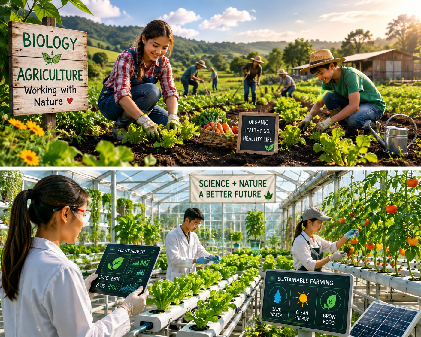
Biology agriculture is much more than a school subject. It is the science that helps farmers understand life on the farm. By applying biological knowledge, farmers can grow healthier crops, raise stronger livestock, improve soil fertility, conserve water, and protect biodiversity. These practices not only increase farm productivity but also create a healthier environment for future generations.
With continuous learning, careful observation, and responsible management, biology agriculture can play a key role in meeting the world’s future food needs while supporting sustainable development.
Frequently Asked Questions (FAQs)
- What is biology agriculture?
Biology agriculture is the study of how living organisms such as plants, animals, microorganisms, and soil organisms work together to improve farming. It helps farmers grow healthy crops while protecting nature.
- Why is biology important in agriculture?
Biology explains how plants grow, how animals stay healthy, and how soil supports crops. Therefore, farmers use biological knowledge to increase food production and reduce environmental damage.
- What are the main branches of biology agriculture?
The major branches include:
- Plant biology
- Animal biology
- Soil biology
- Microbiology
- Genetics
- Ecology
- Biotechnology
Each branch helps improve different parts of farming.
- What is soil biology?
Soil biology is the study of living organisms in soil, such as bacteria, fungi, insects, and earthworms. These organisms improve soil fertility and help plants absorb nutrients.
- What are biofertilizers?
Biofertilizers contain living microorganisms that naturally increase soil fertility. They help plants grow by improving nutrient availability.
- How does biology agriculture help farmers?
It helps farmers:
- Improve crop yields
- Protect soil
- Reduce pests naturally
- Save water
- Produce healthier food
- Lower production costs over time
- What is biological pest control?
Biological pest control uses natural predators, parasites, or microorganisms to manage harmful insects instead of relying only on chemical pesticides.
- What role do microorganisms play in agriculture?
Microorganisms break down organic matter, recycle nutrients, fix nitrogen, and improve soil health. As a result, crops grow stronger.
- What is crop rotation?
Crop rotation means growing different crops on the same field in different seasons. This practice improves soil fertility and reduces pests and diseases.
- What is compost?
Compost is natural fertilizer made from decomposed plant materials, food waste, and animal manure. It enriches soil and improves plant growth.
- How does biology agriculture protect the environment?
It encourages natural farming methods that reduce pollution, improve biodiversity, conserve water, and protect soil for future generations.
- What careers are available in biology agriculture?
Career options include:
- Agricultural Scientist
- Agronomist
- Soil Scientist
- Plant Breeder
- Microbiologist
- Biotechnology Researcher
- Environmental Scientist
- Agricultural Extension Officer
- Is biology agriculture important for climate change?
Yes. Biology agriculture helps farmers develop climate-resilient crops, improve soil health, conserve water, and adapt to changing weather conditions.
- How does pollination affect agriculture?
Pollination helps many crops produce fruits and seeds. Bees, butterflies, birds, and other pollinators play an important role in food production.
- What are the advantages of biology agriculture?
Some major advantages include:
- Higher crop quality
- Healthier soil
- Less pollution
- Better biodiversity
- Sustainable farming
- Improved food security
- Are there any disadvantages?
Some biological methods take longer to show results. Farmers may also need additional training. However, the long-term benefits usually outweigh these challenges.
- How can students start learning biology agriculture?
Students can:
- Study biology in school
- Visit farms
- Join science clubs
- Read agricultural books
- Watch educational videos
- Participate in gardening projects
- Can small farmers use biology agriculture?
Yes. Small farms can benefit from composting, crop rotation, biofertilizers, biological pest control, and water conservation without large investments.
- What is the future of biology agriculture?
The future includes smart farming, improved biological fertilizers, climate-resistant crops, precision agriculture, artificial intelligence, and advanced biotechnology.
- Why will biology agriculture remain important?
As the world’s population grows, farmers must produce more food while protecting natural resources. Biology agriculture provides sustainable solutions for this challenge.
Conclusion
Biology agriculture is one of the most important fields in modern farming because it connects science with everyday agricultural practices. Throughout this guide, you learned how plants, animals, microorganisms, soil, water, insects, and ecosystems work together to support food production.
Moreover, biology agriculture teaches farmers how to improve soil health, increase crop yields, manage pests naturally, conserve water, and protect biodiversity. These practices help produce healthy food while reducing environmental damage.
Although farming continues to face challenges such as climate change, soil degradation, and increasing food demand, biological knowledge offers practical and sustainable solutions. Farmers who understand biology are better prepared to adapt to these challenges and build resilient farming systems.
Whether you are a student, teacher, gardener, researcher, or professional farmer, learning biology agriculture can help you make informed decisions that benefit both people and the planet. By combining scientific knowledge with responsible farming practices, we can create healthier farms, stronger communities, and a more sustainable future for generations to come.
Recommended External Resources
For reliable information about agriculture and biological sciences, explore these trusted organizations:
- Food and Agriculture Organization (FAO): https://www.fao.org
- United States Department of Agriculture (USDA): https://www.usda.gov
- CGIAR: https://www.cgiar.org
- International Rice Research Institute (IRRI): https://www.irri.org
- Nature Education: https://www.nature.com/scitable
- American Society of Agronomy: https://www.agronomy.org
These resources provide research articles, educational materials, farming guides, and the latest developments in agricultural science.


