 kdolu
kdolu Best vegetables for beginner gardeners should be simple, useful, and forgiving when you make a mistake.
Starting a vegetable garden can feel exciting. However, many new gardeners make one big mistake: they plant too much too soon.
Instead, start with a few vegetables that grow well in ordinary home gardens. Tomatoes, bush beans, radishes, lettuce, carrots, cucumbers, zucchini, and peppers are good choices. University of Illinois Extension also recommends several of these crops for new gardeners.
Most importantly, choose vegetables that you actually enjoy eating. That simple choice makes garden work more rewarding.
Why Beginners Should Choose Easy Crops
The best vegetables for beginner gardeners do not need complicated care.
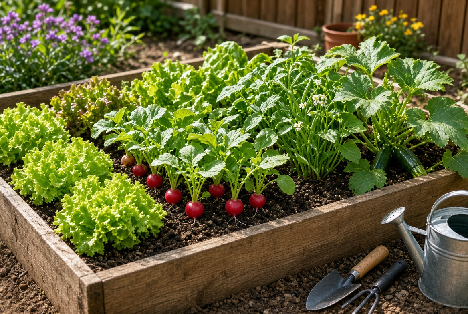
For example, radishes can mature quickly, while bush beans can produce a useful crop without complicated training. Tomatoes also give beginners a clear reason to keep checking their plants because you can watch the fruit grow.
Furthermore, easy vegetables help you learn basic skills such as:
- Preparing soil
- Planting seeds
- Watering
- Thinning seedlings
- Watching for pests
- Harvesting at the right time
- Using mulch
- Planning another crop
Therefore, your first garden should be a learning garden, not a giant farm.
Best Vegetables for Beginner Gardeners: Quick Chart
Here is a simple comparison for new growers.
| Vegetable | Beginner level | Typical harvest idea | Sun need | Container friendly? |
| Radish | Very easy | About 3–5 weeks | Full sun | Yes |
| Bush bean | Easy | About 7–9 weeks | Full sun | Yes |
| Lettuce | Easy | Several weeks | Sun/partial shade | Yes |
| Carrot | Easy | Around 2–3 months | Sun/partial shade | Yes |
| Cucumber | Easy | About 2 months | Full sun | Yes |
| Zucchini | Easy | About 1–2 months | Full sun | Yes, large pot |
| Tomato | Easy to moderate | About 2–3 months after transplanting | Full sun | Yes |
| Pepper | Moderate | Long warm season | Full sun | Yes |
| Spinach | Easy | Several weeks | Sun/partial shade | Yes |
| Swiss chard | Easy | Repeated leaf harvest | Sun/partial shade | Yes |
These times vary by variety, climate, planting method, and growing conditions. For example, University of Minnesota Extension lists radishes as a crop that can be harvested roughly three to five weeks after planting.
Best Vegetables for Beginner Gardeners: Radishes
Radishes may be one of the most satisfying crops for a first garden.
They grow quickly, need little space, and can grow directly from seed. Illinois Extension describes radishes as cool-season, fast-maturing, and easy to grow.
Why radishes work
First, they give beginners quick results.
Second, you do not need a large garden.
Third, you can grow them in containers.
Finally, their roots give you a fun reason to pull a plant from the soil and see what happened underground.
Simple radish tip
Keep the soil reasonably moist. Drought can cause radishes to develop poor flavor and a tougher texture.
Best Vegetables for Beginner Gardeners: Bush Beans
Bush beans are another excellent starting crop.
They usually grow as compact plants instead of long vines. Therefore, they can fit into smaller gardens more easily than some pole varieties.
Beans also provide a useful lesson in harvesting.
When you see young beans forming, check the plants often. Regular harvesting can keep the crop productive.
Beginner bean advantage
Bush beans are especially useful because you can sow another batch later when your climate allows it. This method is called succession planting.
As a result, you can spread your harvest instead of getting everything at once.
Best Vegetables for Beginner Gardeners: Lettuce
Lettuce is a great choice when the weather is cool.
University of Illinois Extension notes that lettuce prefers cool conditions and can struggle in high heat. Hot weather can slow growth, make leaves bitter, and cause the plant to form a seed stalk.
Therefore, do not treat lettuce like a summer tomato.
Make lettuce easier
Plant lettuce during the cooler part of your growing season.
Also, consider leaf lettuce instead of varieties that require a large, perfect head.
You can harvest outer leaves gradually, which makes the crop useful for small households.
Best Vegetables for Beginner Gardeners: Carrots
Carrots look difficult because the edible part grows underground.
However, they can be surprisingly simple.
The main challenge involves soil. Long carrots need loose soil without large stones or hard clumps.
For beginners, shorter carrot varieties can make the job easier.
Carrot lesson
Carrots teach you patience.
Unlike radishes, they may not show you much above the soil. Therefore, avoid pulling them too early just because you are curious.
Best Vegetables for Beginner Gardeners: Cucumbers
Cucumbers can grow quickly when they receive enough warmth, light, water, and space.
They are especially fun for children because the fruit can appear surprisingly fast once the plant gets established.
However, cucumber vines can spread.
Therefore, use a trellis if your variety and space allow it.
A trellis can help keep leaves and fruit off the ground and can make harvesting easier.
Best Vegetables for Beginner Gardeners: Zucchini
Zucchini is famous among gardeners for producing a large harvest from a small number of plants.
That makes it attractive to beginners.
However, there is one warning: give zucchini room.
A single plant can become surprisingly large.
Zucchini advantage
You can harvest the young fruit for grilling, roasting, soups, breads, and other meals.
Zucchini disadvantage
If you plant too many, you may have more zucchini than your household can eat.
So, start with one or two plants rather than filling the whole garden.
Best Vegetables for Beginner Gardeners: Tomatoes
Tomatoes are perhaps the most exciting vegetable for many new gardeners.
University of Illinois Extension says tomatoes are usually easy to grow and notes that a few plants can provide an adequate harvest for many families.
Tomatoes also offer many choices.
You can grow:
- Cherry tomatoes
- Roma tomatoes
- Slicing tomatoes
- Patio tomatoes
- Determinate varieties
- Indeterminate varieties
Tomato beginner tip
If you have limited space, look for compact or patio types.
Furthermore, support plants early if the variety needs a cage or stake.
Best Vegetables for Beginner Gardeners: Peppers
Peppers are good for gardeners who have a warm, sunny growing season.
They need warmth and usually take longer than radishes or lettuce.
However, once established, they can provide a steady supply of fruit.
Sweet peppers are often a better first choice than extremely hot varieties if your family prefers mild food.
Pepper lesson
Peppers teach you that patience matters.
Do not expect every vegetable to grow at the same speed.
Best Vegetables for Beginner Gardeners: Spinach
Spinach can work well in cool weather.
It also grows in containers and smaller spaces.
However, heat can cause leafy greens to bolt. Therefore, plant spinach during a suitable cool season in your area.
If summer temperatures arrive quickly, consider growing another heat-tolerant crop instead.
Best Vegetables for Beginner Gardeners: Swiss Chard
Swiss chard deserves more attention from new gardeners.
It produces attractive leaves and can provide repeated harvests.
Additionally, it can tolerate conditions that make some other leafy vegetables unhappy.
You can harvest the outside leaves while allowing the center to continue growing.
That makes it a useful choice when you want a vegetable garden that keeps producing rather than one large harvest.
Choose Vegetables You Actually Eat
The best vegetables for beginner gardeners are not simply the vegetables with the easiest growing instructions.
They should also match your kitchen.
For example, if your family eats tomatoes every day, grow tomatoes.
If you love salads, plant lettuce, radishes, carrots, and cucumbers.
If you cook beans regularly, grow beans.
This approach reduces waste and gives you a reason to care for the garden.
Check Your Sun Before Buying Seeds
Sunlight can make or break a vegetable garden.
Many popular vegetables need around six to eight hours of full sun each day. Illinois Extension recommends checking the garden area before planting and choosing the sunniest practical location.
Therefore, watch your yard for a full day before you plant.
Notice where shadows fall in the morning.
Then check again around noon.
Finally, check the area in the afternoon.
This simple test can save you from planting tomatoes in a shady corner.
Test Your Soil Before Planting
Healthy soil gives roots a better place to grow.
You do not need to make soil perfect.
Instead, focus on basic improvements.
Look for soil that drains reasonably well and contains organic matter.
A soil test can also help you understand nutrient levels and pH.
Furthermore, avoid adding large amounts of fertilizer just because you think more fertilizer means more vegetables.
Too much of something can create new problems.
Add Compost Carefully
Compost can improve soil structure and add organic matter.
However, compost should not become an excuse to ignore soil testing or good planting practices.
Mix suitable organic matter into poor soil when appropriate.
Also, use finished compost rather than fresh material that may still break down.
University of Illinois Extension recommends adding organic matter or compost when preparing a new garden bed.
Water New Plants the Right Way
Water is one of the most important parts of vegetable gardening.
However, watering every plant on the same schedule is not always smart.
Soil type, weather, rainfall, plant size, and mulch all affect water needs.
University of Minnesota Extension advises checking soil moisture rather than blindly following a fixed schedule. It notes that if soil is dry about two inches below the surface, watering may be needed.
Therefore, put your finger into the soil before reaching for the hose.
Use Mulch to Save Work
Mulch can make a beginner’s garden easier.
It can help reduce evaporation and suppress some weeds.
Furthermore, mulch can protect the soil surface from drying too quickly.
Organic options can include:
- Straw
- Shredded leaves
- Suitable compost
- Other garden-safe organic mulch
Keep mulch away from direct contact with plant stems when appropriate.
Learn the Difference Between Seedlings and Weeds
One of the funniest first-garden problems happens when everything green starts looking like a vegetable.
A tiny weed can look very similar to a seedling.
Therefore, label your rows.
You can also take a picture after planting.
Then, compare new growth with your expected seedlings.
This small habit prevents accidental weed pulling.
Give Plants Enough Space
Crowded plants compete for light, water, air, and nutrients.
They can also create a damp environment around leaves.
Therefore, follow the spacing instructions on the seed packet.
Do not assume that planting more seeds means getting more vegetables.
Instead, give each plant enough room to reach its expected size.
Read the Seed Packet
The seed packet is one of the best tools for a beginner.
It usually provides information about:
- Planting depth
- Spacing
- Germination
- Harvest timing
- Sun needs
- Thinning
- Planting season
University of Illinois Extension specifically recommends using seed-packet information when planning a garden.
Therefore, do not throw the packet away after planting.
Keep it in your garden notebook.
Best Vegetables for Beginner Gardeners: Pick the Right Season
The best vegetables for beginner gardeners depend heavily on the season.
Cool-season crops include many leafy greens, peas, radishes, and similar vegetables.
Warm-season crops include tomatoes, peppers, beans, cucumbers, and squash.
University of Illinois Extension separates many vegetables into cool-season and warm-season groups because temperature strongly affects their growth.
Therefore, always check your local planting calendar.
Use Your Local Climate Instead of Guessing
A planting date that works in Minnesota may not work in Texas.
Likewise, advice for England may not work in Florida.
Climate matters.
For gardeners in the United States, the USDA Plant Hardiness Zone Map provides a useful starting point for understanding local winter temperature patterns. The current USDA map is the 2023 edition.
However, remember that vegetable planting dates also depend on local frost dates and seasonal temperatures.
Container Gardening Can Be Easier
You do not need a backyard.
A balcony, patio, rooftop, or small sunny space can work for many vegetables.
Illinois Extension lists lettuce, spinach, beans, carrots, radishes, peppers, and tomatoes among vegetables that can grow in containers of suitable sizes.
Therefore, beginners with limited space should not give up.
Start with one or two containers.
Pick the Right Container Size
Small containers dry out faster.
Large plants also need more root space.
For example, a patio tomato needs more space than a few radishes.
Likewise, carrots need enough soil depth for the chosen variety.
Therefore, match the container to the crop instead of putting every vegetable into the same pot.
Best Vegetables for Beginner Gardeners: Grow Radishes First
If you want one quick confidence boost, try radishes.
The best vegetables for beginner gardeners should give you feedback quickly, and radishes do exactly that.
University of Minnesota Extension says home gardeners can harvest garden radishes around three to five weeks after planting under suitable conditions.
That short wait can help a new gardener understand how planting, watering, thinning, and harvesting work.
Try a Three-Crop Starter Garden
Instead of planting ten vegetables, try three.
A simple starter garden could include:
- Radishes
- Bush beans
- Cherry tomatoes
This combination gives you different experiences.
Radishes teach quick root-crop growing.
Beans teach flowering and pod production.
Tomatoes teach longer-term plant care.
As a result, you learn more without creating too much work.
A Real-Life Beginner Garden Example
Imagine a homeowner with a small 10-by-10-foot garden.
Instead of filling the entire space, the gardener plants a few tomato plants, one row of radishes, one section of bush beans, and a small patch of lettuce.
The gardener checks the soil regularly.
Then, the gardener harvests radishes first.
Afterward, the empty space can be used for another short-season crop if the local climate permits.
This approach follows the same basic principle recommended by Illinois Extension: start small and use the available space wisely.
Case Study: The Quick Harvest Plan
Consider a beginner who wants results quickly.
They plant radishes first because they mature quickly.
Next, they plant bush beans for a later harvest.
Finally, they add a cherry tomato plant for a longer growing project.
The gardener now has three different harvest windows.
Therefore, one failed crop does not make the entire gardening season feel like a failure.
Case Study: The Balcony Garden
A balcony gardener may have no soil at all.
Instead, they can use suitable containers.
A practical starter mix might include:
- One tomato container
- One bean container
- One lettuce container
- One radish container
- One herb container
The gardener places them where they receive suitable light.
However, containers need careful watering because they can dry faster than garden beds.
Expert Advice: Do Less, Observe More
One of the best lessons for beginners is simple: observe before you react.
Do not immediately add fertilizer when a leaf turns yellow.
First, check the soil.
Then, look at the roots if appropriate.
Next, inspect the leaves for pests.
Finally, think about recent weather.
University of Minnesota Extension provides a vegetable problem-diagnosis tool that covers common crops such as tomatoes, beans, carrots, cucumbers, peppers, spinach, and radishes.
Advantages of Easy Beginner Vegetables
The best vegetables for beginner gardeners offer several benefits.
Advantages
- They are easier to understand.
- Many can grow from seed.
- Several work in containers.
- They provide fresh food.
- They teach useful gardening skills.
- Some mature quickly.
- They can reduce the need to buy certain vegetables.
- They make gardening more enjoyable.
Most importantly, easy crops help beginners build confidence.
Disadvantages to Remember
Even the best vegetables for beginner gardeners have disadvantages.
For example:
- Radishes can become tough if left too long.
- Lettuce dislikes strong heat.
- Zucchini can produce too much.
- Tomatoes can need support.
- Cucumbers can spread.
- Carrots need suitable soil.
- Peppers prefer warm conditions.
- Beans need regular harvesting.
Therefore, “easy” does not mean “zero work.”
Common Beginner Mistake: Planting Too Much
A huge garden can become a huge chore.
University of Illinois Extension recommends starting small because an oversized first garden can become time-consuming.
Therefore, resist the urge to buy every seed packet in the store.
Start with five or fewer crops.
Then, expand after you understand your space.
Common Beginner Mistake: Ignoring Heat
A vegetable can be easy in spring and difficult in summer.
Lettuce provides a good example.
It prefers cooler conditions, while tomatoes enjoy warm growing conditions.
Therefore, match the crop to the season.
Do not blame yourself when a cool-season vegetable struggles during extreme heat.
Common Beginner Mistake: Watering Too Much
New gardeners often think more water means faster growth.
That is not always true.
Roots need both water and air around the soil.
Therefore, check soil moisture before watering.
Use drainage holes in containers.
Also, avoid letting containers sit in standing water for long periods.
Common Beginner Mistake: Forgetting to Harvest
Harvesting is part of growing.
If you leave beans, cucumbers, zucchini, or other crops untouched for too long, they can become oversized or less pleasant to eat.
Therefore, walk through your garden regularly.
Even a five-minute inspection can help you notice vegetables that are ready.
Best Vegetables for Beginner Gardeners: Make a Weekly Plan
The best vegetables for beginner gardeners become easier when you create a simple routine.
Monday
Check soil moisture.
Wednesday
Look for weeds and pests.
Friday
Check for harvestable vegetables.
Weekend
Harvest, remove damaged leaves, and plan the next task.
You do not need to spend hours every day.
University of Illinois Extension suggests visiting a garden at least once or twice a week for care.
A Simple Beginner Harvest Strategy
Do not wait until everything is perfect.
Harvest vegetables when they reach the size and maturity suggested for the variety.
For radishes, that can mean harvesting within a few weeks.
For lettuce, you can often take leaves gradually.
For beans, check frequently once pods begin forming.
For tomatoes, follow the variety’s maturity and color guidance.
Therefore, keep your seed packets nearby.
Best Vegetables for Beginner Gardeners: Keep Notes
The best vegetables for beginner gardeners can become much easier during the second season if you record what happened during the first.
Write down:
- Planting date
- Variety
- Weather
- Watering
- First harvest
- Pest problems
- Best-performing plants
- Crops you disliked
- Crops you want to repeat
Your notes become a personal gardening guide.
Over time, your own garden data may become more useful than generic advice.
Unique Garden Data: Measure Your Own Results
Here is one way to make your gardening project more useful.
Instead of simply saying, “The beans grew well,” record the actual harvest.
For example:
| Crop | Plants | Harvest days | Total harvest |
| Radish | 20 | 25 | 16 usable roots |
| Bush bean | 8 | 55–70 | 1.8 kg |
| Cherry tomato | 2 | 75–100 | 2.4 kg |
These figures are illustrative examples, not universal yield claims. Your actual results will vary.
This type of record gives you unique first-hand data that many generic gardening articles cannot provide.
Updated Gardening Resources and Address
For reliable gardening information, use university extension programs and government resources rather than relying only on social media posts.
Useful resources include:
- University of Illinois Extension vegetable gardening resources
- University of Minnesota Extension vegetable garden guide
- USDA Plant Hardiness Zone Map
- USDA National Agricultural Library
USDA National Agricultural Library address:
10301 Baltimore Avenue, Beltsville, MD 20705, USA.
Update: The USDA released its updated Plant Hardiness Zone Map in November 2023, replacing the previous 2012 edition. The newer map uses 30-year temperature averages from 1991–2020 and incorporates data from 13,412 weather stations.
Best Vegetables for Beginner Gardeners: The Final Shortlist
If you want a short answer, start with these best vegetables for beginner gardeners:
Easiest choices
- Radishes
- Bush beans
- Lettuce
- Carrots
- Spinach
- Swiss chard
Fun warm-season choices
- Cherry tomatoes
- Cucumbers
- Zucchini
- Sweet peppers
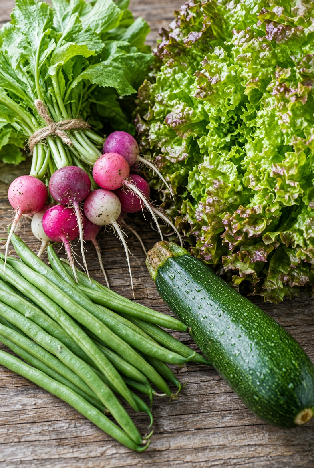
If you have very little space, begin with radishes, lettuce, beans, and a compact tomato.
If you have a larger garden, add cucumbers, carrots, zucchini, and peppers.
Best Vegetables for Beginner Gardeners:FAQs
- What are the best vegetables for beginner gardeners?
The best vegetables for beginner gardeners include radishes, bush beans, lettuce, carrots, cucumbers, zucchini, tomatoes, spinach, Swiss chard, and peppers.
- What vegetable is easiest to grow?
Radishes are among the easiest choices because they grow quickly and can be planted directly from seed.
- What vegetables grow quickly for beginners?
Radishes and some leafy greens can provide relatively quick harvests. Radishes may be ready in roughly three to five weeks under suitable conditions.
- Are tomatoes good for first-time gardeners?
Yes. Tomatoes are popular and usually manageable for new gardeners, although they need suitable light, water, space, and support depending on the variety.
- Can beginners grow vegetables in pots?
Yes. Lettuce, radishes, carrots, beans, spinach, peppers, and tomatoes can grow in suitable containers.
- How much sunlight do vegetables need?
Many popular vegetables need about six to eight hours of full sun. However, some leafy greens and root crops can tolerate partial shade.
- Should beginners grow vegetables from seeds?
Yes, especially with easy crops such as radishes, beans, carrots, and lettuce. Buying young tomato or pepper plants can also make the first season easier.
- What vegetables should beginners avoid?
Beginners may want to postpone crops that require long growing seasons, special support, or more careful timing until they understand their garden.
- How often should a beginner water vegetables?
Do not use one fixed schedule for every garden. Check soil moisture, weather, plant size, and soil type.
- Is compost necessary for a vegetable garden?
Compost can improve soil and add organic matter, but good soil management involves more than simply adding compost.
- Can vegetables grow in partial shade?
Yes. Leafy greens such as spinach, lettuce, and chard can handle less sun than crops such as tomatoes and beans.
- What is the best vegetable for a small garden?
Radishes, lettuce, bush beans, carrots, and compact tomatoes can work well when space is limited.
- How big should a beginner garden be?
Start with a small bed or a few containers. A smaller garden is easier to water, weed, inspect, and harvest.
- Should I plant all vegetables at once?
No. Plant according to your local season and the instructions for each crop.
- Why are my lettuce leaves bitter?
High temperatures can cause lettuce to become bitter and bolt.
- Why are my radishes tough?
Drought stress can lead to poor flavor and tougher radish texture.
- Should I use mulch in a vegetable garden?
Yes, suitable mulch can help conserve soil moisture and reduce weed pressure.
- What is succession planting?
Succession planting means planting another batch of a crop after an earlier batch so that harvests are spread over time.
- What is the biggest beginner gardening mistake?
Planting too much is one of the most common problems. A small garden is easier to manage and learn from.
- What should I grow in my first vegetable garden?
Start with three to five vegetables you enjoy eating. A simple combination could be radishes, bush beans, lettuce, and a cherry tomato.
Conclusion
The best vegetables for beginner gardeners are the crops that make gardening simple, enjoyable, and rewarding.
You do not need expensive tools.
You do not need a huge backyard.
You do not need to know everything before planting your first seed.
Instead, start with a few easy crops. Give them suitable light, reasonable soil, enough water, and enough space. Then, watch what happens.
Radishes can give you an early win. Beans can teach you about flowering and harvests. Lettuce can introduce you to cool-season growing. Tomatoes can give you a longer project. Meanwhile, carrots, cucumbers, zucchini, spinach, chard, and peppers can help you build more skills.
Most importantly, the best vegetables for beginner gardeners are the vegetables that help you learn.
Your first garden does not have to be perfect. It only needs to grow enough for you to learn something, harvest something, and want to plant again.