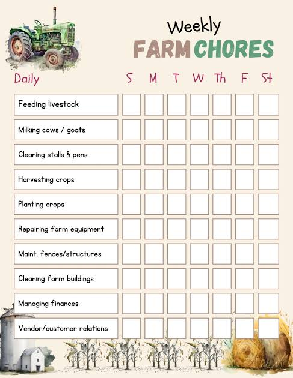
 kdolu
kdolu Beginner farm chores checklist planning makes farm life much easier. When you are new to farming, even simple jobs can feel like a lot.
You may need to feed chickens, check goats, water plants, inspect fences, clean animal areas, collect eggs, and check equipment. Meanwhile, weather can change your plans quickly.
Therefore, a simple routine helps you know what needs attention first.
This guide gives you a practical farm chore system for a small homestead, hobby farm, market garden, or new family farm. It does not assume that you have expensive equipment or years of experience.
Instead, it focuses on simple jobs you can repeat each day.
Important: Farm chores vary by animal, crop, climate, season, and local rules. Use species-specific advice from your veterinarian, agricultural extension office, or other qualified professional when needed.
Why a Beginner Farm Chores Checklist Matters
A beginner farm chores checklist turns a busy morning into a clear plan.
First, you know which jobs must happen every day. Next, you can separate daily work from weekly and seasonal tasks.
For example, feeding animals cannot usually wait until the weekend. However, cleaning a tool shed may be done once a week.
The University of Minnesota Extension says good livestock management includes water, shelter, cleanliness, nutrition, preparation, and low-stress handling.
So, your list should focus on animal health and safety before less important cleaning jobs.
Start With a Farm Walk
Before touching a tool, walk around your property.
Look at fences, gates, water sources, animal shelters, crops, paths, and equipment.
Then ask yourself:
- Is anything broken?
- Does every animal look normal?
- Is water available?
- Did a gate stay open?
- Did an animal escape?
- Did strong weather cause damage?
- Are any plants showing signs of stress?
This five-minute walk can help you spot small problems before they become expensive ones.
Beginner Farm Chores Checklist for Early Morning
Morning chores often set the tone for the whole day.
A useful morning routine can look like this:
- Walk the farm.
- Check animals.
- Check water.
- Give scheduled feed.
- Open or move animals as planned.
- Collect eggs or other products.
- Check young animals.
- Inspect fences and gates.
- Water crops when needed.
- Write down unusual findings.
Of course, your actual routine depends on your farm.
Check Animals Before Feeding Them
Do not rush straight to the feed bucket.
Instead, look at the animals first.
Check whether they are standing, walking, eating, drinking, and behaving normally.
Look for signs that seem different from their normal behavior.
For example, an animal that stays alone, refuses food, struggles to walk, or behaves strangely may need attention.
However, do not try to diagnose serious illness yourself. Contact your veterinarian when an animal appears sick or injured.
Beginner Farm Chores Checklist for Fresh Water
Fresh water deserves a high place on your list.
Animals need reliable access to suitable water, although exact needs vary greatly by species, size, age, weather, feed, and health.
Penn State Extension notes that water intake is closely connected with feed intake and reports typical daily ranges of about 7–30 gallons for cattle, 1–2 gallons for sheep, and around 10 gallons for horses, depending on conditions.
Therefore, never use one water number for every animal.
Check troughs, buckets, nipples, pipes, and automatic waterers.
Also, remove dirt, algae, leaves, and other unwanted material.
Keep Animal Feed Organized
Feed becomes easier to manage when you store it in one clean, dry place.
Use labeled containers when practical.
Write down:
- Feed type
- Animal group
- Amount normally used
- Delivery date
- Storage location
- Special instructions
Furthermore, keep feed away from moisture and pests.
Do not suddenly change an animal’s diet without proper guidance. Different species have different feeding needs.
Beginner Farm Chores Checklist for Chickens
Chicken chores can be simple, but they still need consistency.
A basic chicken routine includes:
- Check birds.
- Provide suitable feed.
- Check clean water.
- Collect eggs.
- Look at the coop.
- Check doors and latches.
- Remove obvious wet bedding.
- Watch for unusual behavior.
Also, make sure predators cannot easily enter.
A broken latch that looks small in the morning can become a major problem at night.
Beginner Farm Chores Checklist for Goats
Goats are curious animals, so fence checks matter.
Check:
- Fences
- Gates
- Water
- Feed
- Shelter
- Hoof condition
- General behavior
Goats can also test weak fence points.
Therefore, do not assume a fence is secure simply because it looked fine yesterday.
When handling goats, stay calm and avoid sudden movements.
Beginner Farm Chores Checklist for Sheep
Sheep need regular observation.
Watch the flock as a group and notice animals that behave differently.
Check water, feed, shelter, fencing, and pasture conditions.
Keep records of health treatments and other important events.
If you see signs of illness, injury, or unusual behavior, ask a veterinarian or qualified livestock adviser for help.
Beginner Farm Chores Checklist for Pigs
Pig chores often involve more than filling a feeder.
Check:
- Feed
- Water
- Shelter
- Fencing
- Bedding
- Mud and drainage
- Animal behavior
Water deserves special attention because pigs can create messy areas quickly.
Also, inspect feeders and drinkers often.
Beginner Farm Chores Checklist for Horses
Horse care requires careful daily observation.
Check water, feed, shelter, fencing, and general behavior.
Also, look at the horse’s body and movement from a safe position.
Routine hoof care should follow guidance from a qualified farrier or veterinarian.
Never assume that a horse is safe to approach simply because you know it well.
Animals can react suddenly.
Keep Young Animals on a Separate Watch
Young animals often need closer attention than healthy adults.
Therefore, add a special section to your list for:
- Newborns
- Young chicks
- Kids
- Lambs
- Calves
- Puppies used around the farm
Check that young animals are warm, active, feeding properly, and protected from hazards.
If something seems wrong, seek professional help quickly.
Beginner Farm Chores Checklist for Pastures
Pasture checks do not need to take hours.
Walk or visually inspect grazing areas.
Look for:
- Broken fencing
- Fallen branches
- Standing water
- Toxic plants
- Bare patches
- Muddy areas
- Escaped animals
- Damaged gates
Additionally, watch how animals use the pasture.
Heavy use in one area may tell you that rotation or management needs attention.
Inspect Fences Every Day
Fence repairs can prevent escapes and protect animals.
You do not have to inspect every inch of a large property every morning.
Instead, check gates and known weak points first.
After storms, however, inspect more carefully.
Look for fallen trees, loose wires, broken posts, damaged electric fencing, and open gates.
Beginner Farm Chores Checklist for Garden Work
If you grow vegetables, your garden needs its own section.
Daily garden work may include:
- Checking moisture
- Looking for pests
- Removing damaged leaves
- Checking supports
- Harvesting ripe crops
- Watching new seedlings
- Checking irrigation
Not every garden needs watering every day.
Instead, check soil and plant needs before adding water.
Learn to Read Your Soil
Good farming is not simply about adding more water.
Touch the soil and observe its condition.
If it feels dry where plant roots need moisture, watering may help.
However, overly wet soil can also cause problems.
Therefore, keep notes about rainfall, irrigation, soil condition, and crop response.
Over time, these notes become more useful than guessing.
Beginner Farm Chores Checklist for Harvest Time
Harvesting should happen at the right stage for each crop.
Pick vegetables, fruit, herbs, or flowers according to the needs of that crop.
Then remove damaged produce from good produce.
Keep harvested food clean and protected.
Also, record how much you harvest.
This helps you understand which crops perform well on your land.
Keep Weeds Under Control
Weeds can compete with crops for light, water, nutrients, and space.
However, you do not need to remove every unwanted plant immediately.
Prioritize weeds around young crops and areas where they spread quickly.
Use the method that fits your crop, soil, local rules, and farming system.
Beginner Farm Chores Checklist for Compost
Compost can turn some farm waste into useful organic material.
However, do not place every farm waste product into one pile without checking whether it belongs there.
Keep your compost area managed and reasonably contained.
Turn or manage the pile according to the compost method you use.
Also, keep animals from damaging the pile or eating unsuitable material.
Clean Animal Housing
Clean housing helps create a healthier environment.
Remove wet or heavily soiled bedding as needed.
Keep sleeping areas dry.
Clean feeders and water containers regularly.
The exact cleaning schedule depends on animal type, housing design, weather, and bedding.
Furthermore, do not use harsh cleaning products around animals unless the product is suitable and used according to its label.
Beginner Farm Chores Checklist for Manure
Manure management is part of normal farm work.
Collect manure from areas where it builds up.
Then move it to an appropriate storage or composting area.
Keep runoff away from waterways and places where it can create contamination problems.
Your local agricultural office can help you understand manure rules and best practices for your location.
Store Tools After Every Job
A missing shovel wastes time.
A rusty tool can also make work harder.
Therefore, return tools to their proper place after use.
Create simple zones for:
- Hand tools
- Garden tools
- Feed tools
- Cleaning supplies
- Repair items
- Protective gear
Label shelves if several people share the farm.
Beginner Farm Chores Checklist for Tool Care
At the end of a work session, spend a few minutes checking tools.
Remove dirt from shovels, hoes, forks, clippers, and similar equipment.
Dry metal tools before storage.
Sharpen cutting tools when needed.
Replace broken handles and damaged parts.
A small repair today can prevent a frustrating job tomorrow.
Inspect Farm Machinery Carefully
Machinery requires more care than simple hand tools.
Before operating equipment, inspect it and understand its controls.
The University of Minnesota Extension recommends reading the operator’s manual, following safety decals, inspecting equipment, and identifying hazards such as moving, crush, and pinch points.
Never work on moving machinery.
Before approaching equipment for inspection or repair, shut it down, remove the key, and wait until moving parts stop.
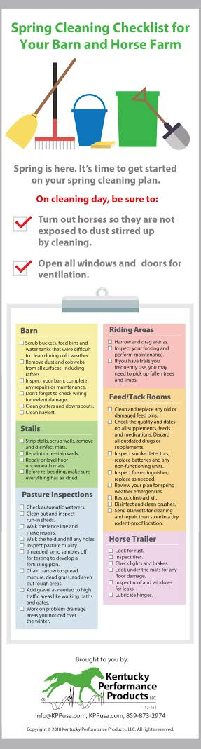
Beginner Farm Chores Checklist for Equipment Cleaning
Clean equipment can support both safety and farm hygiene.
UMN Extension notes that tires, undercarriages, grills, floors, and other machine areas can carry diseases, pests, weeds, plant material, and manure.
Therefore, clean equipment when needed, especially when moving between different areas.
Keep wastewater away from animals, crops, pens, and waterways.
Make Safety a Daily Chore
Safety should not become a job you remember only after an accident.
Instead, make it part of your routine.
Before starting work, ask:
What could hurt me today?
The answer might be:
- A loose animal
- Slippery ground
- Machinery
- Heat
- Chemicals
- Sharp tools
- Heavy objects
- Poor lighting
Then change your plan if necessary.
Beginner Farm Chores Checklist for Personal Protection
Use suitable protective gear for the task.
Depending on the job, that may include gloves, boots, eye protection, hearing protection, work clothing, or respiratory protection.
UMN Extension explains that protective equipment should fit properly and match the task.
Therefore, do not treat safety gear as optional decoration.
Good gear should help you work safely without making movement difficult.
Keep Children Away From Dangerous Jobs
Farm work can teach children useful skills.
However, not every farm chore is suitable for every child.
UMN Extension warns that farm environments contain hazards involving machinery, livestock, grain bins, silos, and chemicals. It also recommends age-appropriate tasks and supervision.
So, give children simple jobs only when the task matches their age, size, skills, and supervision needs.
Beginner Farm Chores Checklist for Weather
Weather can change your chore plan.
Before heading outside, check conditions that matter to your work.
During hot weather, plan demanding jobs for cooler parts of the day when practical.
During storms, avoid unnecessary exposure to lightning and dangerous conditions.
After heavy rain, check:
- Fences
- Drainage
- Roads
- Animal shelters
- Water sources
- Low areas
- Trees
Prepare for Farm Emergencies
Every farm needs an emergency plan.
Write down important contacts such as your veterinarian, emergency services, feed supplier, fuel supplier, and local agricultural support.
UMN Extension recommends keeping an inventory of livestock, crops, machinery, fuel, fertilizer, medicines, and other important items.
Penn State Extension also recommends writing down daily animal care tasks, including feeding and watering details, so another person can help during an emergency.
Beginner Farm Chores Checklist for Record Keeping
A notebook can become one of your best farm tools.
Record:
- Feed used
- Water problems
- Animal health concerns
- Births
- Deaths
- Treatments
- Egg production
- Harvest amounts
- Repairs
- Weather
- Purchases
Do not worry about making the record fancy.
Make it easy enough that you will actually use it.
Build a Weekly Chore Routine
Daily chores are only one part of farm care.
Once a week, review:
- Fence condition
- Tool condition
- Feed storage
- Animal housing
- Pasture condition
- Garden beds
- Equipment
- Compost
- Records
- Supplies
Then choose the three most important jobs for the coming week.
This keeps your list realistic.
Beginner Farm Chores Checklist for Monthly Planning
Monthly planning helps prevent forgotten jobs.
Look ahead for:
- Vaccination appointments
- Farrier visits
- Seed orders
- Crop planting
- Harvest periods
- Fence repairs
- Equipment service
- Feed purchases
- Seasonal weather
- Local reporting deadlines
For beginning farmers in the United States, USDA recommends keeping track of finances, deadlines, land and resource management, and other farm records.
Use a Three-Level Chore System
A useful trick is to divide chores into three groups.
Must Do
These jobs protect animals and people.
Examples include water, scheduled feeding, urgent animal checks, and safety problems.
Should Do
These jobs improve the farm.
Examples include cleaning, weed control, minor repairs, and tool care.
Can Wait
These jobs are helpful but not urgent.
Examples include organizing an old storage shelf or repainting a noncritical structure.
This simple system reduces stress.
Beginner Farm Chores Checklist Chart
| Farm Area | Daily | Weekly | Monthly/Seasonal |
| Animals | Observe, feed, water | Housing review | Health planning |
| Chickens | Feed, water, eggs | Coop clean | Predator-proofing review |
| Goats | Feed, water, observe | Fence review | Hoof-care planning |
| Garden | Moisture and crop check | Weed and pest review | Planting schedule |
| Pasture | Animal/fence glance | Condition review | Rotation planning |
| Tools | Return after use | Clean and inspect | Repair or replace |
| Machinery | Safety check before use | Clean as needed | Scheduled service |
| Records | Note major events | Review notes | Financial review |
| Safety | Check hazards | Review supplies | Emergency-plan review |
The exact timing should change with your animals, crops, weather, and farm size.
Real-Life Farm Example
Consider a small family farm with chickens, goats, a vegetable garden, and one acre of pasture.
The new farmer begins each morning with a 20-minute walk.
First, they check the goats and chickens.
Next, they inspect water.
Then they feed the animals and collect eggs.
After that, they check the garden.
Finally, they write down anything unusual.
One morning, they notice that a goat is staying away from the herd. Because the daily routine includes observation, they notice the change early and contact their animal-care professional.
The lesson is simple: a good chore list does not replace experience. It helps you notice changes.
Case Study: Ranch Chores Across Seasons
A USDA Forest Service report documenting ranch operations gives a useful real-world example of how chores change with seasons.
The ranch schedule included daily feeding, water hauling, breaking ice, checking livestock, fence repairs, equipment repairs, pasture movement, and animal care during winter conditions.
The important lesson is not to copy that exact schedule.
Instead, notice how the work changes with weather and animal needs.
A beginner farm plan should also change throughout the year.
Expert Advice: Observe Before You Act
Extension livestock guidance emphasizes basic husbandry, preparation, communication, attention to detail, and low-stress handling.
That gives beginners an important lesson.
Do not rush.
Watch the animal first.
Then decide what action makes sense.
When handling livestock, stay calm and learn normal animal behavior. UMN Extension provides stockmanship guidance that focuses on animal behavior and safe movement.
Advantages of a Chore Checklist
A beginner farm chores checklist offers several clear benefits.
Better Time Control
You know where to start.
Fewer Forgotten Jobs
Important tasks stay visible.
Easier Training
Another family member can follow the same routine.
Better Animal Observation
Regular checks help you notice changes.
Better Records
You can track what happened.
Less Stress
You do not have to remember everything in your head.
Disadvantages of Using a Fixed Checklist
A checklist is useful, but it has limits.
First, farming changes constantly.
Rain can change a garden job.
Heat can change working hours.
An injured animal can move to the top of the list.
A broken water line can make every other chore less important.
Therefore, do not follow a checklist blindly.
Use it as a guide.
How Beginners Can Avoid Overwork
New farmers often try to do everything in one day.
That approach can quickly lead to exhaustion.
Instead, choose your priorities.
Start with:
- People and safety
- Animal needs
- Water
- Time-sensitive crops
- Urgent repairs
- Routine cleaning
- Optional projects
Also, take reasonable breaks.
A tired person makes poorer decisions around animals and equipment.
Create a Printable Morning List
Here is a simple version you can copy into a notebook:
Morning
- Walk the property
- Check animals
- Check water
- Feed animals
- Check young animals
- Collect eggs/products
- Check gates
- Check fences
- Check garden
- Record problems
Evening
- Check animals again
- Check water
- Secure shelters
- Close gates
- Store tools
- Check weather
- Write tomorrow’s priorities
Beginner Farm Chores Checklist for Beginners With Limited Time
If you only have 30 minutes, focus on essentials.
Spend the first few minutes checking animals and water.
Then complete scheduled feeding.
Next, handle any urgent safety problem.
After that, do one small cleaning or repair job.
Do not try to finish a two-hour project in a 30-minute window.
Consistency matters more than trying to do everything.
Improve Your Checklist Every Season
Your first list will not be perfect.
That is normal.
At the end of each season, ask:
- What did I forget?
- Which chore took too long?
- Which task was unnecessary?
- Which problem happened repeatedly?
- Which supplies ran out?
- What should happen earlier next year?
Then update the list.
Over time, your checklist becomes a personal farm-management tool rather than a generic list.
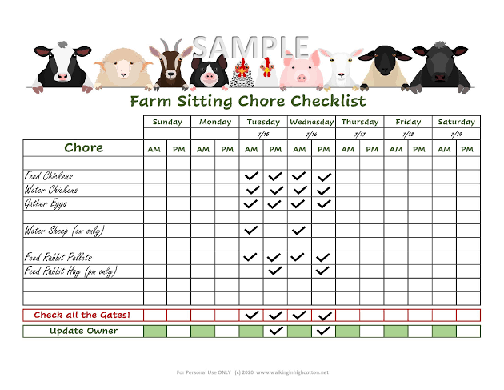
Frequently Asked Questions About Beginner Farm Chores Checklist
- What is a beginner farm chores checklist?
A beginner farm chores checklist is a simple list that organizes regular farm tasks such as animal care, watering, feeding, cleaning, inspections, gardening, and safety checks.
- What should I do first on a small farm?
Start with safety, then check animals and water. After that, complete feeding and other time-sensitive jobs.
- How often should farm animals get checked?
Healthy animals generally need regular observation, but the exact schedule depends on species, age, health, weather, and management system. Follow professional advice for special situations.
- Should water be checked every day?
Yes, water should be part of your regular animal-care routine. However, automatic systems also need inspection because pipes, valves, and drinkers can fail.
- What are the most important beginner farm chores?
Animal observation, feeding, water checks, safety checks, shelter checks, fence checks, and urgent crop care are usually high-priority tasks.
- How long should morning chores take?
There is no single correct time. A small homestead may need a short routine, while a livestock farm may need several hours.
- Should I clean animal housing every day?
Clean housing as often as needed to maintain suitable conditions. Wet bedding and manure buildup may require more frequent attention.
- How can I remember farm chores?
Use a notebook, printed list, phone reminder, whiteboard, or farm-management app. The best system is the one you actually use.
- What should beginners do after heavy rain?
Check animals, fences, gates, drainage, shelters, roads, and water sources. Also look for fallen branches and damaged structures.
- Should children help with farm chores?
Children can learn from suitable farm tasks, but adults should match tasks to the child’s age, size, ability, and supervision needs.
- Can I use one checklist for every animal?
No. Chickens, goats, sheep, pigs, cattle, and horses have different needs. Use a general list plus species-specific tasks.
- How often should I inspect fences?
Look at important fence areas regularly and inspect more carefully after storms, animal escapes, or repairs.
- What tools should a beginner have?
Basic hand tools may include a shovel, rake, hoe, fork, bucket, work gloves, boots, pruning tools, and suitable cleaning supplies. Your animals and crops determine what else you need.
- Do beginners need farm records?
Yes. Simple records can help you track animal care, harvests, expenses, repairs, and important dates.
- How can I make chores faster?
Keep tools near the areas where you use them, group similar jobs together, prepare feed ahead when safe, and return equipment after every use.
- What should I do if an animal looks sick?
Separate or protect the animal according to your farm’s veterinary plan and contact a veterinarian or qualified animal-care professional. Avoid guessing at treatment.
- Should farm chores change by season?
Absolutely. Winter, spring, summer, and fall create different needs for animals, crops, water, fences, equipment, and weather protection.
- What is the biggest beginner mistake?
Trying to remember everything without a system is a common problem. A written routine makes important tasks easier to track.
- Can a checklist prevent farm accidents?
A checklist can help you notice hazards and remember safety steps, but it cannot remove every risk. Training, proper equipment, supervision, and good judgment still matter.
- Where can new farmers get reliable help?
In the United States, USDA provides resources for beginning farmers and ranchers, including planning, funding, education, and farm-management support.
For local animal and crop questions, your veterinarian and agricultural extension service are also valuable sources of advice.
Final Thoughts
A beginner farm chores checklist does not need to be complicated.
In fact, the best list is often simple enough to use every morning.
Start with people, animals, water, food, and safety. Then move to gardens, fences, cleaning, tools, equipment, and records.
Most importantly, learn to observe.
Farming is not only about completing chores. It is about noticing what has changed.
A healthy animal may suddenly behave differently. A fence may break after a storm. A garden may need water sooner than expected. A machine may make an unusual sound.
Therefore, use your checklist as a starting point, not a rigid rule.
USDA describes beginning farmers as people who have operated a farm or ranch for 10 years or less, and it provides dedicated resources to help them plan, build, sell, and maintain their operations.
With a clear routine, good records, safe habits, and help from qualified experts, beginners can build confidence one chore at a time.
External Resources
- USDA Beginning Farmers and Ranchers — planning, funding, education, and farm-management resources.
- USDA: Maintain Your Farm Operation — records, finances, deadlines, land management, and risk management.
- University of Minnesota Extension: Livestock Farm Management — animal husbandry and farm-management basics.
- University of Minnesota Extension: Farm Safety — machinery, livestock, emergency, youth, and general farm safety.
- Penn State Extension: Keeping Water Troughs Clean — livestock water needs and trough hygiene.
- Penn State Extension: Livestock Emergency Response Plan — preparing daily animal-care instructions for emergencies.