 kdolu
kdolu Easy homestead projects for beginners can turn an ordinary yard, balcony, patio, or small piece of land into a more useful and rewarding space. You do not need a huge farm, expensive machines, or years of experience to begin. Instead, you can start with one small project and build your skills over time.
Homesteading is not about doing everything at once. It is about learning simple ways to grow food, reduce waste, save money, care for animals, store supplies, and become more self-reliant. Therefore, even a beginner can make steady progress with the right plan.
In this guide, you will find 45 practical project ideas, including gardening, composting, food storage, rainwater collection, simple repairs, chickens, herbs, and outdoor improvements. You will also find real-life examples, a case study, expert advice, advantages, disadvantages, a comparison chart, safety tips, and 20 frequently asked questions.
Most importantly, these ideas are designed to be simple. You can choose projects that match your space, budget, time, and skill level.
Why Easy Homestead Projects for Beginners Make Sense
Starting small makes homesteading much less stressful. For example, building one garden bed can teach you about soil, sunlight, watering, planting, weeds, and harvests.
Likewise, a small compost bin can teach you how organic waste turns into useful soil material.
Penn State Extension recommends that new vegetable gardeners start small and choose a garden location with good sunlight and access to water.
Therefore, do not feel that you need a large property to become a homesteader.
A few containers can be enough to start.
A small backyard can support herbs and vegetables.
Even a balcony can support some edible plants.
Most importantly, choose projects that solve a real problem in your home.
Start With Your Biggest Everyday Need
Before buying tools, ask yourself one simple question:
What do I want to improve first?
Maybe you spend too much money on fresh herbs. In that case, start a herb garden.
Perhaps your kitchen produces lots of food scraps. Then a compost project makes sense.
Maybe your yard becomes dry during summer. A rainwater collection project may help where local rules allow it.
Or perhaps you want fresh eggs. A small chicken setup could become a future project.
This approach keeps your homestead practical rather than complicated.
Make a Simple Homestead Project List
Write down five things you want to learn.
For example:
- Grow vegetables.
- Make compost.
- Preserve food.
- Repair simple household items.
- Keep a small flock of chickens.
Next, rank each idea by cost, time, difficulty, and usefulness.
Start with the easiest project that provides a clear benefit.
That first success can give you confidence for the next project.
Build a Small Raised Garden Bed
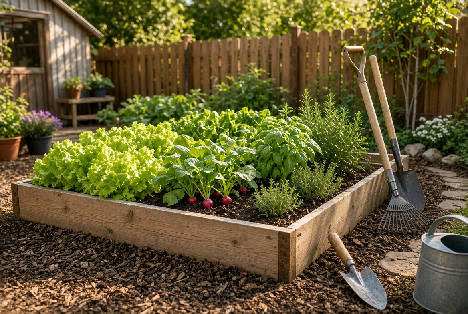
A raised bed is one of the best easy homestead projects for beginners because it gives you a clear space for growing food.
You can build a basic bed from untreated lumber, suitable recycled materials, or a ready-made garden frame.
Choose a sunny location first.
Then decide how large the bed should be.
A smaller bed is often easier for a beginner because it needs less soil, water, and maintenance.
Penn State Extension provides beginner resources for raised-bed production and notes that raised beds can help when growing conditions or existing soil are not ideal.
Simple raised-bed plan
- Pick a sunny area.
- Mark the bed.
- Build a low frame.
- Fill it with suitable soil and compost.
- Add a simple mulch layer.
- Plant easy crops.
- Water when needed.
- Watch the plants every few days.
Start with crops such as lettuce, radishes, beans, herbs, or other plants suited to your local climate.
Create a Kitchen Herb Garden
A herb garden is cheap, useful, and easy to manage.
You can grow herbs in pots, wooden boxes, raised beds, or even suitable recycled containers with drainage holes.
Try herbs such as basil, mint, parsley, chives, rosemary, or cilantro, depending on your climate.
Place herbs where you can easily reach them.
That matters because you are more likely to use them when they are close to the kitchen.
Furthermore, growing herbs teaches basic lessons about watering, sunlight, pruning, harvesting, and plant care.
Start a Beginner Compost Bin
Composting is another excellent project.
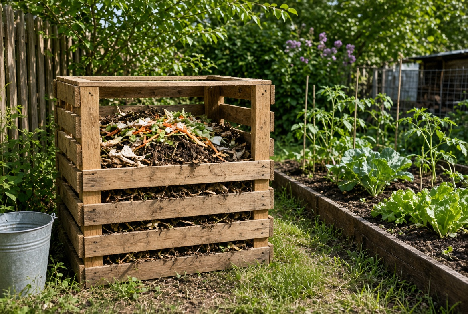
A basic compost system can turn suitable food scraps and yard materials into useful organic material for your garden.
The EPA explains that home composting can reduce household waste while producing compost for gardens and plants.
You can make a simple bin from wood, wire mesh, or another suitable container.
Keep the system easy to reach.
You will need a mix of carbon-rich materials, such as dry leaves, and nitrogen-rich materials, such as many fruit and vegetable scraps. The EPA explains that moisture, oxygen, material size, and the balance of carbon and nitrogen all affect composting.
Avoid these beginner mistakes
Do not add pet waste, meat, bones, grease, or dairy products to a basic backyard compost pile. These materials can cause pest and odor problems or may not break down properly in a home pile.
Make a Simple Leaf-Mold Pile
Leaf mold is different from regular compost.
Instead of mixing many materials, you mostly collect fallen leaves and let them break down over time.
This makes a very low-effort project.
Collect leaves in a wire enclosure or simple pile.
Keep the pile reasonably moist.
Then give nature time to work.
Eventually, the leaves break down into dark, crumbly material that you can use around suitable garden areas.
This project is especially useful if your property produces many fallen leaves.
Build a Mulch Station
Mulch can help cover bare soil and reduce weed growth.
You can create a small storage area for suitable leaves, straw, wood chips, or other appropriate mulch materials.
Keep mulch away from the direct base of plant stems and tree trunks.
Also, avoid using materials that may contain harmful chemicals or unwanted weed seeds.
A mulch station gives you a ready supply whenever you plant a new bed.
Therefore, this simple project can save repeated trips to the store.
Make a Seed-Starting Shelf
You do not need a greenhouse to start seeds.
A small shelf near a bright window can work for some plants.
Add trays, labels, and suitable growing material.
If natural light is not enough, a suitable plant light can help.
Keep your setup clean and organized.
Also, label every tray.
That small habit prevents confusion later.
A seed-starting shelf is especially useful for gardeners who want to grow more plants without buying mature plants each season.
Create a Seed Storage Box
Seeds can become hard to find when they are scattered around drawers.
Instead, make one small seed storage box.
Use envelopes, small containers, or a dedicated organizer.
Write the plant name and date on each packet.
Then organize seeds by plant type or planting season.
You can also keep a simple notebook with notes about what grew well.
Over time, your seed box becomes a small record of your garden.
Build a Simple Garden Tool Rack
Tools become easier to use when they have a home.
Therefore, make a simple rack for:
- Hand trowels
- Pruners
- Shovels
- Rakes
- Gloves
- Garden string
- Small buckets
A few hooks can make a big difference.
You can build the rack from scrap wood if you already have suitable material.
However, do not use damaged wood with exposed nails or unsafe surfaces.
The goal is simple: every tool should have a place.
Make a Rainwater Collection Setup
Rainwater collection can be useful for garden watering, but local rules vary.
Before installing anything, check your local laws and water rules.
A basic setup may collect rain from a suitable roof or downspout into an approved barrel or tank.
Add a secure lid or screen to help keep debris and mosquitoes out.
Never assume collected rainwater is safe to drink.
For a beginner, use the water for suitable outdoor purposes where local rules allow it.
The biggest benefit is convenience. You have water available closer to the garden when rain fills the container.
Build a Simple Garden Watering System
You do not need a complex irrigation system.
A beginner can start with a hose, watering can, or simple drip setup.
Water the root area instead of constantly spraying the leaves.
Also, check the soil before watering.
If the soil is already moist, more water may not help.
A simple watering schedule can also reduce forgotten plants.
Write watering notes on a small garden calendar.
Create a Rain Garden Area
A rain garden can help manage water moving across a yard.
Choose an appropriate low area where water naturally collects.
However, do not dig blindly near buildings, underground utilities, septic systems, or other sensitive areas.
Select plants that fit your local conditions.
A rain garden can also create a useful space for flowers and beneficial insects.
Before starting, research local guidance for soil, drainage, and suitable plants.
Make a Backyard Pollinator Garden
A pollinator garden can bring bees, butterflies, and other helpful insects into your outdoor space.
Choose flowers suited to your area.
Try to include plants that bloom at different times.
That way, the garden can offer food across a longer season.
Avoid using harmful chemicals without understanding their effects.
Instead, focus on healthy soil, suitable plants, water, and shelter.
A pollinator garden can be beautiful while also teaching children about nature.
Plant a Small Berry Patch
Berry plants can be a fun step after growing herbs and vegetables.
Depending on your climate, you might grow strawberries, raspberries, blackberries, blueberries, or other locally suitable fruit.
Research the needs of each plant before buying.
Some berries need special soil conditions.
Others need strong support or regular pruning.
Start with a few plants instead of creating a huge patch.
This keeps the project manageable.
Grow a Vertical Garden
A vertical garden is useful when ground space is limited.
You can grow suitable plants upward using trellises, frames, or other safe supports.
Beans, peas, cucumbers, and some flowering plants can work well with the right support.
Secure the structure properly.
Also, make sure it can handle wind and the weight of mature plants.
Vertical growing helps you use space more efficiently.
Create a Simple Trellis
A trellis is one of the easiest garden structures to build.
You can use strong stakes, wire, string, or suitable garden mesh.
Install the support before plants become large.
That way, young plants can climb naturally.
A trellis also keeps some crops off the ground.
As a result, harvesting can become easier.
Make a Kitchen Scrap Collection System
Instead of throwing every food scrap into the trash, separate suitable scraps for composting.
Place a small container near the kitchen work area.
Add fruit and vegetable scraps, coffee grounds, and other suitable materials.
Then transfer them to your compost system.
The EPA recommends storing food scraps in a closed container before moving them to a compost pile.
This project takes only a few minutes to set up.
However, it can become one of the most useful daily habits on your homestead.
Build a Simple Food-Drying Rack
Drying food can help preserve certain fruits, herbs, and vegetables.
However, food preservation requires proper methods.
Do not simply place food outside and assume it is safe.
Use tested food-preservation guidance.
The University of Minnesota Extension provides research-based guidance for drying, freezing, blanching, and canning.
For beginners, herbs are often a simple place to learn.
Wash them properly.
Dry them using an appropriate method.
Then store them in clean, dry containers.
Learn Freezer Food Preservation
Freezing can be a useful way to preserve seasonal food.
However, many vegetables require blanching before freezing.
University of Minnesota Extension explains that vegetables should generally be blanched before freezing, drying, or dehydrating, with some exceptions.
Therefore, do not guess about food safety.
Use tested instructions for the specific food.
Start with small batches.
Record the date.
Label every container.
That simple system makes your freezer much easier to manage.
Create a Small Pantry Storage System
A homestead pantry does not need to look fancy.
Use shelves, baskets, jars, and labeled containers.
Keep older items where you can see them.
Then place newer items behind them.
This simple first-in, first-out approach can help reduce forgotten food.
Keep dry foods in suitable containers.
Also, watch for moisture, insects, and temperature problems.
A clean pantry is a practical homesteading project because it improves organization every day.
Make a Simple Root-Vegetable Storage Area
Some root vegetables can be stored for longer periods under suitable conditions.
However, storage needs vary by crop.
Before storing a crop, learn its preferred temperature, humidity, ventilation, and preparation method.
Do not store damaged produce with healthy produce.
Check stored vegetables regularly.
Remove anything that shows serious rot.
This project can help you understand seasonal food storage without requiring a large cellar.
Build a Small Chicken Coop
Chickens can be rewarding, but they are living animals, not a simple weekend decoration.
Therefore, research local rules and animal-care needs first.
A chicken coop needs protection from predators, suitable ventilation, easy cleaning, safe flooring, roosting space, and secure doors.
Oregon State University Extension recommends designing a coop around predator protection, ventilation, cleaning access, and adequate space.
For example, OSU’s guidance lists at least 3 square feet per bird when chickens have access to an outdoor run and more space when they do not.
Start with a small flock only after you understand the daily work involved.
Create a Chicken Feed Storage Station
If you keep chickens, feed storage becomes important.
Use a strong, sealed container that protects feed from moisture and pests.
Keep the container away from rain.
Clean spills quickly.
Also, do not let feed sit in open bags where rodents can easily reach it.
This project is simple, but it can prevent waste.
Build a Small Chicken Run
A secure run gives chickens a controlled outdoor area.
Use strong fencing.
Check the bottom and corners for gaps.
Predators can dig, climb, or squeeze through surprisingly small openings.
OSU Extension recommends secure fencing and additional protection against digging predators when designing chicken areas.
Therefore, spend more time on security than decoration.
Make a Simple Garden Fence
A garden fence can help protect plants from animals.
The correct fence depends on what you are trying to keep out.
Small pests may need smaller openings.
Larger animals may require taller or stronger fencing.
First identify the pest.
Then choose the barrier.
This saves money because you avoid building a fence that solves the wrong problem.
Build a Compost Sifter
A compost sifter is a simple frame with mesh.
You can place finished compost on top and shake it gently.
Fine material falls through.
Larger sticks and unfinished pieces stay above.
Return the larger pieces to the compost pile.
A sifter can make homemade compost easier to spread around young plants.
Make a Garden Journal
A garden journal costs almost nothing.
Write down:
- Planting dates
- Seed types
- Weather notes
- Watering
- Harvest amounts
- Pest problems
- Successful crops
- Failed crops
At first, your notes may seem basic.
However, after one full growing season, they become valuable.
You can compare what worked and what failed.
Then you can make better choices next year.
Start a Homestead Budget Notebook
Homesteading can save money, but not every project saves money.
Therefore, track your spending.
Write down the cost of:
- Seeds
- Soil
- Tools
- Feed
- Containers
- Lumber
- Repairs
- Water equipment
Then compare those costs with what you actually produce or save.
This prevents the common mistake of buying expensive equipment before developing basic skills.
Make a Repair Box
A repair box can hold simple supplies such as:
- Screws
- Nails
- Washers
- Hooks
- Tape
- Rope
- Zip ties
- Small tools
- Spare fasteners
Keep everything labeled.
However, only perform repairs you understand and can do safely.
Never experiment with electrical wiring, gas lines, major plumbing, roofs, or structural work if you lack the required skills.
A repair box should help with small jobs, not encourage unsafe work.
Create a Reuse-and-Repair Station
Before throwing something away, ask:
Can I repair it?
A broken garden handle might need replacement rather than disposal.
A loose shelf may need a screw.
A damaged storage box may need a small repair.
This project supports the basic homestead idea of using resources carefully.
However, do not reuse containers or materials when they may contain harmful chemicals or unsafe residues.
Build a Firewood Storage Rack
If you use firewood, a proper storage rack can keep wood off wet ground.
Use a stable design.
Keep the wood stack secure.
Choose a safe location away from hazards.
Also, follow local fire and building rules.
The goal is not to create the biggest woodpile.
The goal is to keep fuel organized and dry.
Create a Simple Outdoor Workbench
An outdoor workbench can become the center of your homestead projects.
You can use it for:
- Potting plants
- Repairing tools
- Building small boxes
- Cleaning harvests
- Sorting supplies
Use a stable surface.
Keep sharp tools stored safely.
Cover the bench when needed to protect it from weather.
A workbench can support many future projects, so it may be worth building early.
Make a Small Washing Station
A simple outdoor washing station can help clean garden tools, boots, buckets, and produce.
However, separate produce washing from dirty tool cleaning.
Keep clean food away from soil, animal waste, chemicals, and dirty equipment.
For food, use safe water and clean surfaces.
This project becomes especially useful during harvest season.
Create a Harvest Basket System
Harvesting gets easier when you have the right containers ready.
Keep a few clean baskets or food-safe containers near the garden.
Use smaller containers for delicate crops.
Use larger containers for sturdy vegetables.
Do not overload containers because heavy piles can damage soft produce.
After harvesting, sort the produce quickly.
Then decide what to eat, store, freeze, dry, or preserve.
Build a Small Rain Shelter for Supplies
Outdoor supplies can quickly become damaged by rain.
A small covered storage area can protect:
- Empty pots
- Buckets
- Garden tools
- Wood
- Soil bags
- Trellises
Make sure the structure is stable.
Also, avoid storing items where they block walkways or exits.
A simple roof can greatly extend the life of outdoor equipment.
Make a Simple Chicken Egg Station
If you eventually keep laying hens, create one place for egg collection.
Keep clean baskets and washable supplies nearby.
Collect eggs regularly.
Store them according to safe local food-handling guidance.
Also, clean the nesting area regularly.
The point is to create a simple routine rather than making egg collection complicated.
Create a Seasonal Homestead Calendar
A calendar can bring your entire homestead together.
Divide the year into seasons.
Write down:
- Seed starting
- Planting
- Pruning
- Compost checks
- Harvest periods
- Food preservation
- Tool cleaning
- Animal-care tasks
- Garden cleanup
The exact dates depend on your climate.
Therefore, use local agricultural guidance instead of copying dates from another region.
Start a Simple Food Scrap Garden Experiment
This can be a fun learning project.
Some plants can regrow from suitable kitchen scraps, although results vary.
Try experiments with items such as green onions or herbs.
Use clean containers.
Watch the roots and leaves develop.
The goal is not to create unlimited food.
Instead, it teaches children and beginners how plants grow.
Build a Simple Worm Compost Bin
Worm composting can be another option for people with limited space.
A worm bin can turn suitable organic scraps into nutrient-rich castings.
However, worms need the right moisture, food, temperature, and bedding.
Do not overload the bin.
Also, research which worm species are suitable for your local conditions.
This project can work well for small homes when traditional compost piles are not practical.
Create a Small Medicinal Herb Garden
A herb garden can also focus on plants commonly used for cooking, fragrance, or traditional household purposes.
However, do not assume that a plant is safe to eat or use as medicine simply because it is called an herb.
Identify every plant correctly.
Research safety before consuming anything.
For a beginner, focus first on culinary herbs.
That gives you useful plants without encouraging risky experiments.
Build a Simple Seedling Hardening Area
Young plants need care when moving from protected indoor conditions to outdoor conditions.
Create a small sheltered area where seedlings can gradually experience outdoor conditions.
Protect them from strong wind and harsh weather.
Increase outdoor exposure gradually.
Watch for signs of stress.
This small project can improve your confidence with starting plants from seed.
Create a Homestead Cleaning Station
Homesteading produces dirt.
You will clean boots, tools, buckets, harvest baskets, pots, and work areas.
Create one cleaning station with:
- A brush
- Water access
- A bucket
- Clean cloths
- Suitable soap
- Tool-cleaning supplies
Keep food areas separate from dirty equipment.
A clean workspace also makes future projects easier.
Build Your First Complete Mini Homestead
Now combine several small projects.
For example, your first mini homestead could include:
- One raised garden bed
- One herb garden
- One compost bin
- One tool rack
- One rain barrel where allowed
- One pantry shelf
- One garden journal
- One simple workbench
That is already a meaningful start.
You do not need a barn.
You do not need dozens of animals.
You do not need acres of land.
You need a system that you can actually maintain.
Easy Homestead Projects for Beginners: Best Projects by Difficulty
| Project | Cost | Time to Start | Skill Level | Main Benefit |
| Herb garden | Low | 1–2 hours | Very easy | Fresh herbs |
| Compost bin | Low | 1–3 hours | Easy | Soil material |
| Raised bed | Low–medium | 2–6 hours | Easy | Grow vegetables |
| Tool rack | Low | 1–2 hours | Easy | Better storage |
| Garden journal | Very low | 20 minutes | Very easy | Better planning |
| Mulch station | Low | 1–2 hours | Very easy | Soil cover |
| Trellis | Low | 1–3 hours | Easy | Vertical growing |
| Seed box | Very low | 30 minutes | Very easy | Seed organization |
| Pantry shelf | Low–medium | 2–4 hours | Easy | Food storage |
| Rainwater setup | Medium | Several hours | Medium | Garden watering |
| Chicken coop | Medium–high | Several days | Medium | Poultry housing |
| Chicken run | Medium | 1–3 days | Medium | Animal protection |
| Food preservation | Low–medium | Varies | Medium | Longer food storage |
| Workbench | Medium | 1 day | Medium | Multi-use workspace |
Real-Life Example: easy homestead projects for beginners
Imagine a beginner named Sarah who has a small backyard.
At first, she wants to become more self-reliant but feels overwhelmed.
She thinks she needs a greenhouse, chickens, fruit trees, a large garden, and expensive tools.
Instead, she chooses three projects.
First, she builds one raised bed.
Next, she starts a compost bin.
Finally, she plants herbs in containers.
During the first season, she learns that she planted too much lettuce but not enough herbs.
She also learns that her garden dries faster than expected.
Therefore, she changes her watering routine.
In the second season, she uses her journal to improve planting.
She adds another bed only after she feels comfortable with the first one.
This example shows why small steps work.
The best project is not always the biggest project.
The best project is the one you can finish and maintain.
Case Study: Turning Garden Waste Into a Useful Resource
Consider a beginner with a small vegetable garden.
Every week, the household produces vegetable scraps.
Meanwhile, the yard produces leaves and small plant material.
Instead of sending everything to the trash, the household starts a compost pile.
They separate suitable kitchen scraps from meat, grease, dairy, and other unsuitable materials.
Then they mix food scraps with dry leaves and maintain reasonable moisture.
Over time, the compost becomes dark and crumbly.
The EPA notes that compost can improve soil structure, water retention, and soil health.
The household now has a useful garden material while reducing some organic waste.
That is a simple example of a homestead system.
One activity supports another.
Advantages of Easy Homestead Projects for Beginners
There are many reasons to start with small projects.
Save Money Over Time
Growing herbs can reduce some grocery purchases.
Composting can reduce the need to buy certain soil amendments.
Repairing suitable items can reduce replacement costs.
However, remember that savings depend on project cost, local prices, and how much you actually use.
Learn Practical Skills
You learn by doing.
A small garden teaches more than reading about gardening forever.
A simple repair teaches you how materials fit together.
A compost bin teaches you how organic material breaks down.
Reduce Waste
Composting and reuse projects can help keep useful materials out of the trash.
The EPA says composting recycles organic material into a useful soil amendment.
Improve Food Awareness
Growing food teaches you how much work goes into producing it.
You learn about seasons, weather, soil, pests, and harvest timing.
Build Confidence
Each finished project creates another useful skill.
That confidence can encourage you to try harder projects later.
Spend More Time Outdoors
Gardening and outdoor projects can give you a reason to spend time outside.
For many people, that alone makes homesteading enjoyable.
Disadvantages of easy homestead projects for beginners
Homesteading sounds exciting, but it also has challenges.
Projects Take Time
A garden needs regular care.
Chickens need daily attention.
Compost needs management.
Therefore, do not start more projects than you can maintain.
Initial Costs Can Add Up
Tools, lumber, soil, fencing, containers, and animal supplies can become expensive.
Start with what you already have.
Some Projects Fail
Seeds may not grow.
Pests may destroy crops.
A repair may not work.
A compost pile may smell bad.
Failure is part of learning.
Animals Create Responsibility
Chickens need food, clean water, shelter, protection, and regular care.
OSU Extension specifically encourages people to understand the costs and care involved before getting backyard chickens.
Rules Can Limit Projects
Local laws may affect livestock, structures, water collection, fires, composting, and food sales.
Always check local rules before construction or animal projects.
Expert Advice for First-Time Homesteaders
The strongest beginner advice is simple:
Do less, but do it well.
Start with one project.
Finish it.
Use it.
Learn from it.
Then add another project.
Penn State Extension also recommends that beginner gardeners start small until they understand how much time they have available.
For gardening, test or learn about your soil before adding large amounts of amendments.
For composting, keep the pile balanced and reasonably moist.
For food preservation, use tested instructions rather than guessing.
For chickens, build the coop and secure the run before bringing birds home.
For tools, buy only what you need.
Most importantly, avoid the idea that you must become completely self-sufficient.
Even experienced homesteaders still buy things.
The goal is to become more capable, not perfect.
How to Choose the Right First Project for easy homestead projects for beginners
Use this five-question test.
Question 1: Does it solve a real problem?
If yes, keep it on your list.
Question 2: Can I finish it this weekend?
If yes, it is probably a good beginner project.
Question 3: Can I afford it without stress?
If no, choose a cheaper project.
Question 4: Can I maintain it?
A project that looks great but requires more time than you have may become a burden.
Question 5: Will I learn a useful skill?
If yes, the project has long-term value.
A 30-Day easy homestead projects for beginners Challenge
You can use the following simple plan.
Days 1–3: Choose Your Goal
Pick one main goal.
Do not choose ten.
Days 4–7: Plan
Measure your space.
Check sunlight.
List materials.
Set a budget.
Days 8–12: Gather Supplies
Buy only what you need.
Reuse safe materials when appropriate.
Days 13–16: Build
Complete the basic structure.
Do not worry about making it perfect.
Days 17–20: Start
Plant seeds, start compost, organize storage, or begin the chosen project.
Days 21–25: Observe
Watch what happens.
Write down problems.
Days 26–28: Improve
Fix small issues.
Move tools.
Change watering.
Add labels.
Days 29–30: Review
Ask:
- What worked?
- What failed?
- What cost more than expected?
- What would I change?
- What should I build next?
That final review can be more valuable than the original plan.
Easy homestead projects for beginners Common Beginner Mistakes to Avoid
Starting Too Big
A huge garden looks impressive.
However, it can quickly become hard to maintain.
Buying Too Many Tools
Buy tools after you understand what you actually need.
Ignoring Sunlight
A beautiful garden in the wrong location may fail.
Penn State Extension recommends choosing a garden location with around 6–8 hours of sunlight for many vegetable gardens.
Forgetting Water Access
A garden far from water can become annoying.
Therefore, think about watering before planting.
Skipping Labels
Label seeds, seedlings, jars, and stored food.
Guessing About Food Safety
Food preservation deserves special care.
Use tested instructions from reliable extension services or food-safety authorities.
Getting Animals Too Soon
Build your animal system first.
Then decide whether you have enough time and money for animals.
Easy Homestead Projects for Beginners on a Small Budget
You can start with almost no special equipment.
Try these first:
- Seed organization.
- Garden journal.
- Herb containers.
- Compost collection.
- Leaf pile.
- Tool organization.
- Mulch collection.
- Pantry organization.
- Repair box.
- Pollinator flowers.
These projects focus on skills rather than expensive equipment.
As your skills grow, you can move toward larger projects.
Easy Homestead Projects for Beginners With No Land
You can still homestead without a large yard.
Use containers.
Grow herbs near a sunny window.
Start a suitable worm compost system.
Learn food preservation.
Build a pantry system.
Repair household items.
Make homemade cleaning solutions only when you know the ingredients are safe for the intended use.
Learn sewing.
Learn basic cooking.
Grow microgreens.
Keep a food and garden journal.
Homesteading is a mindset as much as it is a location.
Easy Homestead Projects for Beginners With Children
Children can participate in simple, supervised jobs.
For example, they can:
- Label seed packets.
- Plant large seeds.
- Water plants.
- Collect suitable leaves.
- Record garden growth.
- Pick herbs.
- Measure plant height.
- Help organize tools.
Keep sharp tools, chemicals, machinery, fires, animals, and food-preservation equipment under proper adult supervision.
The goal is to teach responsibility while keeping the work fun.
How to Make Your Homestead More Efficient
Efficiency comes from systems.
For example, place your compost near the garden.
Keep your tools near your work area.
Store seeds in one location.
Keep harvest baskets near the garden.
Keep chicken supplies near the coop.
Keep food-preservation supplies together.
These small changes reduce wasted time.
Therefore, when planning your next project, ask:
How can this project make another project easier?
That question can help you create a connected homestead.
Frequently Asked Questions about easy homestead projects for beginners
- What are the best easy homestead projects for beginners?
The best choices include a small raised bed, herb garden, compost bin, seed box, garden journal, tool rack, and pantry organization system. Start with one project that solves a real need.
- Can I start homesteading without owning land?
Yes. You can grow herbs in containers, preserve food, compost where allowed, repair items, organize food storage, and learn useful household skills.
- What is the cheapest homestead project?
A garden journal, seed organizer, kitchen scrap collection system, or leaf pile can cost very little. You can also start with seeds or plants you already own.
- Are raised beds good for beginners?
Yes. Raised beds create a defined growing area and can be useful where existing soil is poor or unsuitable.
- How big should my first garden be?
Start small. Choose a size you can water, weed, plant, and harvest without feeling overwhelmed.
- What should I put in a beginner compost bin?
Suitable fruit and vegetable scraps, leaves, grass clippings mixed appropriately, coffee grounds, and other suitable plant materials can work. Avoid meat, bones, grease, dairy, pet waste, and diseased plants in a basic backyard pile.
- Does compost really help garden soil?
Yes. Compost adds organic matter and can improve soil structure and water retention.
- Can beginners raise chickens?
Yes, but chickens require daily care and proper housing. Build a secure coop and run first, and check local rules before getting birds.
- How much space do chickens need?
Space needs depend on the setup. OSU Extension gives specific coop-space guidance and emphasizes predator protection, ventilation, and maintenance.
- Is rainwater safe to drink?
Do not assume collected rainwater is drinking water. If you want potable water, use a system designed and approved for that purpose and follow local health requirements.
- What vegetables are easiest for beginners?
Choose crops suited to your local climate and season. Leafy greens, radishes, beans, and some herbs can be approachable choices, but local growing conditions matter.
- Should I buy expensive gardening tools?
No. Start with basic tools and add equipment when you know you need it.
- How can I save money while homesteading?
Start small, reuse safe materials, track expenses, grow useful crops, repair suitable items, and avoid buying equipment simply because it looks impressive.
- Is food preservation safe for beginners?
It can be, but food safety matters. Use tested recipes and methods from trusted extension or food-safety sources rather than guessing.
- Do vegetables need to be blanched before freezing?
Many vegetables do. University of Minnesota Extension recommends blanching most vegetables before freezing, drying, or dehydrating, with listed exceptions.
- What is the biggest beginner homesteading mistake?
Starting too many projects at once is one of the biggest problems. A small successful project is better than ten unfinished projects.
- Can homesteading really save money?
It can in some areas, but results vary. Consider your costs for tools, supplies, seeds, soil, feed, water, and time before assuming a project will save money.
- How long does compost take?
The timeline depends on materials, moisture, oxygen, temperature, and management. University of Minnesota Extension notes that a well-managed pile can be ready in a few months under favorable warm-season conditions, while an unmanaged pile may take much longer.
- What should I build first on a homestead?
For most beginners, start with something small and useful, such as a herb garden, compost bin, raised bed, tool rack, or pantry organization system.
- What should I do after my first project?
Use it for a while.
Record what you learn.
Fix problems.
Then choose your next project based on what your homestead actually needs.
Final Thoughts for easy homestead projects for beginners
Easy homestead projects for beginners do not need to be complicated, expensive, or perfect.
The best starting point is usually something small.
Build one garden bed.
Grow a few herbs.
Start a compost system.
Organize your pantry.
Make a tool rack.
Learn one food-preservation method.
Then stop and see what you learned.
Over time, those small skills can connect.
Your compost can support your garden.
Your garden can provide food.
Your harvest can fill your pantry or freezer.
Your tool station can make repairs easier.
Your garden journal can help you plan the next season.
That is the real value of easy homestead projects for beginners.
You are not trying to build a perfect farm in one weekend.
You are building skills, habits, and systems one step at a time.
Start with one project you can finish.
Then make it better.
After that, choose the next useful project.
That simple approach can turn almost any suitable space into a more productive, organized, and rewarding homestead.
External Resources for easy homestead projects for beginners
- EPA – Composting at Home
Excellent for your sections about compost bins, kitchen scraps, brown and green materials, moisture, and backyard composting. The EPA explains different home composting methods and basic compost management. EPA: Composting at Home - EPA – Composting Overview
Useful for explaining why composting matters, how carbon and nitrogen materials work together, and how compost improves soil. EPA: Composting - Penn State Extension – Beginner Vegetable Gardening
A strong resource for your raised-bed, vegetable garden, sunlight, soil, garden planning, and garden-journal sections. Penn State recommends starting small and choosing a location with good sunlight and water access. Penn State Extension: Beginner Vegetable Gardening - Penn State Extension – Resources for Beginning Raised Bed Production
Great for supporting your discussion of raised garden beds, especially for people with small spaces or poor existing soil. This resource was updated in June 2026. Penn State Extension: Beginning Raised Bed Production - Oregon State University Extension – Backyard Chicken Coop Design
Use this in your chicken-coop and chicken-run sections. It covers predator protection, coop size, ventilation, roosting poles, nest boxes, and cleaning. OSU Extension: Backyard Chicken Coop Design - Oregon State University Extension – Backyard Chicken Costs and Care
This is useful when discussing the disadvantages and responsibilities of keeping chickens. It emphasizes understanding the time, care, and coop requirements before getting birds. OSU Extension: Backyard Chicken Costs and Care - University of Minnesota Extension – Food Preservation
A very useful external source for your food-drying, freezing, canning, and food-preservation sections. It provides research-based guidance for safely preserving food at home. University of Minnesota Extension: Food Preservation - National Center for Home Food Preservation – University of Georgia
This is one of the best resources to cite when discussing canning, freezing, drying, fermenting, pickling, jams, and food storage. The center provides current research-based recommendations for home food preservation. National Center for Home Food Preservation