 kdolu
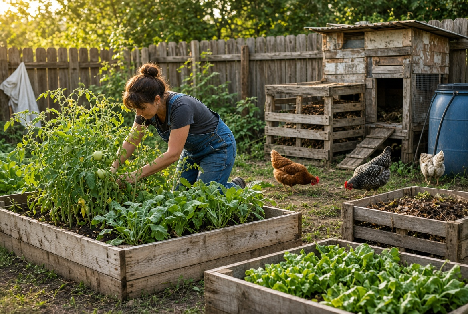
kdolu Homesteading for beginners on a budget does not mean buying a large farm, building a fancy barn, or spending thousands of dollars on tools. Instead, it means learning simple skills that help you grow food, reduce waste, save money, and become more self-reliant.
You can start with a small garden. You can grow herbs in containers. You can learn to bake bread, preserve food, collect rainwater where legal and safe, make compost, or repair simple household items.
Most importantly, you do not need to do everything at once.
A small homestead can begin on a balcony, patio, rented home, suburban yard, or small piece of land. The U.S. Department of Agriculture notes that urban agriculture can happen in both urban and suburban areas, so homesteading does not always require rural land.
So, if money is tight, start with what you already have.
This guide explains how to build a low-cost homestead step by step. You will learn what to buy, what to avoid, which projects offer the best value, how to grow food cheaply, and how to turn everyday household waste into useful resources.
What Homesteading Really Means Today
Homesteading can look different for every family.
For one person, it may mean growing tomatoes and herbs. For another, it may mean raising chickens, preserving vegetables, making soap, or living with less waste.
Therefore, do not compare your beginning with someone else’s finished homestead.
Modern homesteading focuses on useful skills and greater independence. It can include:
- Growing vegetables
- Raising small livestock
- Baking and cooking from scratch
- Food preservation
- Composting
- Seed saving
- Repairing items
- Making simple household products
- Reducing food waste
- Learning basic animal care
- Gardening in containers
- Building emergency food supplies
The goal is not perfection.
Instead, the goal is to produce more of what you need while wasting less of what you already have.
Why Homesteading for Beginners on a Budget Makes Sense
Homesteading for beginners on a budget works best when you focus on skills before equipment.
Many new homesteaders make one common mistake. They buy everything before learning what they actually need.
A better approach is simple:
Learn → Start small → Test → Improve → Expand.
For example, you do not need a $500 garden setup to grow lettuce. A simple container, suitable soil, seeds, water, and sunlight may be enough.
Likewise, you do not need an expensive compost tumbler. The EPA explains that backyard composting can use simple systems and common materials such as leaves, food scraps, twigs, and cardboard.
That is the heart of budget homesteading.
Set a Small Homestead Goal First
Before spending money, decide what you want your homestead to do.
Ask yourself:
- Do I want to save money?
- Do I want to grow fresh food?
- Do I want more emergency food?
- Do I want to reduce waste?
- Do I want to learn traditional skills?
- Do I want to raise animals?
- Do I want to become more independent?
Pick two or three goals.
For example:
“This year, I want to grow $200 worth of vegetables, make compost, and learn food preservation.”
That goal gives you direction.
Without a clear goal, it is easy to buy random tools and supplies.
Homesteading for Beginners on a Budget Starts With What You Own
Homesteading for beginners on a budget becomes much easier when you take inventory before shopping.
Walk around your home.
Look for:
- Buckets
- Jars
- Wooden boxes
- Old containers
- Shelves
- Hand tools
- Cardboard
- Newspapers
- Food storage containers
- Large pots
- Unused fabric
- Kitchen scraps
- Yard leaves
- Old towels
- Wooden pallets
Some items may become useful for gardening or storage.
However, safety comes first. Avoid containers that held dangerous chemicals, and do not use treated materials where they can contaminate food or soil.
Your first homesteading tool may already be sitting in your garage.
Build a $50 Starter Plan
A budget does not need to be exact because local prices vary.
Still, you can create a simple starter budget.
| Item | Low-Cost Target | Purpose |
| Vegetable seeds | $5–$15 | Start crops |
| Basic hand trowel | $5–$10 | Planting |
| Watering can | $5–$10 | Watering |
| Containers | $0–$10 | Reuse first |
| Compost | $0–$10 | Soil improvement |
| Gloves | $5–$10 | Hand protection |
| String or labels | $0–$5 | Garden organization |
| Total | About $20–$70 | Basic start |
Prices vary by location and season.
Therefore, treat this as a planning example rather than a fixed shopping list.
Choose Your Homestead Size Carefully
A bigger homestead is not always better.
In fact, a small garden that you manage well can teach you more than a huge garden that becomes overwhelming.
Start with:
- One garden bed
- A few containers
- One compost system
- A small pantry project
- One new skill each month
Penn State Extension recommends that beginner gardeners start small until they understand how much time they can give to the garden.
That advice applies well to homesteading too.
Homesteading for Beginners on a Budget in Small Spaces
You can practice homesteading for beginners on a budget even without a large yard.
Try:
- Balcony containers
- Window herbs
- Vertical planters
- Hanging baskets
- Patio vegetables
- Community gardens
- Small raised beds
- Indoor seed starting
USDA resources describe urban agriculture as food production in urban and suburban areas, showing that food growing does not have to happen on a traditional farm.
A small space can still produce useful food.
Find the Best Garden Spot
Sunlight matters.
Most common vegetables need plenty of direct sunlight. Penn State Extension notes that many vegetables and flowers need around six to eight hours of full sun each day.
Therefore, watch your yard before you plant.
Check the area in the morning.
Check it again at noon.
Then check it in the afternoon.
Look for:
- Sunlight
- Drainage
- Water access
- Wind
- Nearby trees
- Foot traffic
- Animal access
The best garden location may not be the area that looks nicest.
It is the area that helps plants grow.
Test Your Soil Before Spending Big
Do not automatically buy bags of fertilizer.
First, learn what your soil needs.
A soil test can show important information about nutrients and soil conditions. University of Minnesota Extension recommends soil testing before making fertilizer decisions.
This can save money because you avoid buying products your soil does not need.
Also, if you garden near an old building, busy road, railroad, or former industrial site, consider testing for possible contaminants before growing food. Extension guidance highlights this concern for some garden sites.
Improve Soil Without Spending a Fortune
Healthy soil is one of the best investments you can make.
Fortunately, you do not always need expensive products.
You can improve soil with:
- Finished compost
- Leaf mold
- Suitable organic matter
- Mulch
- Proper crop rotation
- Cover crops
- Reduced soil disturbance
The EPA explains that compost can improve soil structure, help retain moisture, and support plant growth.
However, never assume that more compost is always better.
Use soil-test results and local gardening guidance when deciding what your garden needs.
Homesteading for Beginners on a Budget With Compost
Homesteading for beginners on a budget becomes especially powerful when your kitchen waste becomes garden material.
Instead of throwing away vegetable scraps, you can compost suitable materials.
A basic compost system needs:
- Browns
- Greens
- Moisture
- Air
Brown materials can include dry leaves, twigs, and plain shredded cardboard.
Green materials can include vegetable scraps, fruit scraps, and grass clippings.
The EPA recommends keeping a suitable balance of brown and green materials and covering food scraps with dry material to help reduce pests.
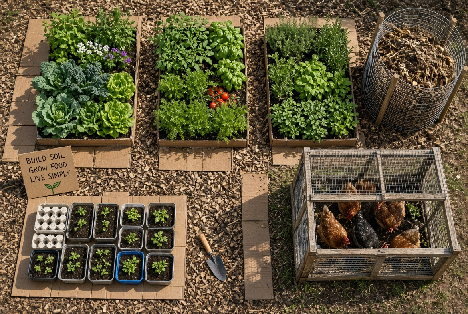
You can build a basic compost bin from inexpensive materials.
Make a Simple Compost Bin
You do not need a fancy compost machine.
Depending on local rules and conditions, you can use:
- Wire fencing
- Untreated wood
- A suitable bin
- Blocks
- A simple pile
Make sure the system allows airflow and keeps unwanted animals out.
The EPA says backyard compost bins can use wire, wood, or other simple materials.
Keep meat, dairy, grease, and other problem materials out of a basic backyard pile unless your local composting system specifically accepts them.
Grow the Vegetables You Actually Eat
Do not grow something simply because another homesteader grows it.
Grow food your household will eat.
If your family eats lots of:
- Tomatoes
- Peppers
- Beans
- Lettuce
- Cucumbers
- Herbs
- Carrots
- Greens
then start there.
This approach gives your garden a clear purpose.
A beautiful crop that nobody eats does not save money.
Start With Easy Crops
Some crops can be easier for beginners than others.
Depending on your climate, consider:
- Radishes
- Lettuce
- Bush beans
- Green onions
- Herbs
- Zucchini
- Cucumbers
- Leafy greens
However, climate matters.
A crop that grows easily in one region may struggle in another. University extension resources recommend choosing crops based on local temperature, planting dates, and growing conditions.
Save Money With Seeds
Seeds often cost less than buying many mature plants.
You can also learn to save seeds from suitable open-pollinated plants.
However, do not expect every saved seed to produce the exact same plant. Hybrid plants can produce different results in the next generation.
Start with one or two crops.
Learn how seed saving works.
Then expand.
Homesteading for Beginners on a Budget With Seed Starting
Homesteading for beginners on a budget can become cheaper when you learn to start some plants from seed.
You can reuse suitable containers for seed starting, as long as they are clean and have proper drainage.
You can also use simple labels made from recycled materials.
University of Minnesota Extension provides guidance on starting seeds and transplanting seedlings, while Utah State University Extension stresses the importance of matching seed-starting plans to climate and growing conditions.
The key is not fancy equipment.
The key is light, moisture, temperature, and timing.
Reuse Containers for Garden Growing
Before buying plant pots, look around your home.
Some food-safe containers can become planters.
Examples may include:
- Clean buckets
- Large food containers
- Old pots
- Wooden boxes
- Reused nursery pots
Always provide drainage.
A container without drainage can hold too much water and damage plant roots.
Also, never use a container that previously held toxic chemicals.
Grow Herbs for Quick Wins
Herbs can make excellent beginner crops.
Consider:
- Basil
- Mint
- Chives
- Parsley
- Cilantro
- Oregano
- Thyme
However, mint can spread quickly, so many gardeners prefer keeping it in containers.
Herbs also make good candidates for windowsills and small patios.
A few pots can provide fresh flavor without requiring a large garden.
Use Mulch to Save Water and Work
Mulch can help reduce weeds and protect soil.
Depending on your garden and local conditions, you might use:
- Dry leaves
- Straw
- Untreated organic material
- Suitable grass clippings
- Compost
Keep mulch away from plant stems when appropriate.
Mulch can also reduce how often you need to deal with weeds. UMN Extension notes that mulch can help control weeds in home gardens.
That saves both time and effort.
Learn Simple Water-Saving Habits
Water can become a major garden expense.
Therefore:
- Water near the soil
- Water when plants need it
- Use mulch
- Choose suitable plants
- Group plants with similar needs
- Fix leaks
- Avoid unnecessary runoff
If you want to collect rainwater, check your local rules first.
Also, use clean water systems for edible crops and avoid unsafe water sources.
Homesteading for Beginners on a Budget and Rainwater
Homesteading for beginners on a budget often includes rainwater collection because water is valuable.
However, rainwater systems need careful planning.
You should check:
- Local laws
- Roof material
- Storage safety
- Mosquito control
- Water quality
- Intended use
Do not assume collected rainwater is automatically safe to drink.
For garden use, follow local guidance and use safe practices.
Learn Food Preservation Slowly
Growing food is only part of homesteading.
You also need to learn how to use the harvest.
Common preservation methods include:
- Freezing
- Drying
- Refrigerating
- Fermenting
- Pickling
- Canning
Food safety matters here.
Do not invent preservation methods for low-acid foods. Instead, use tested recipes and trusted food-safety guidance.
The National Center for Home Food Preservation is a useful research-based resource for home preservation information.
Do Not Buy a Canning Kit Too Early
If you grow only a small amount of food, you may not need a large preservation setup.
Start with freezing or drying when appropriate.
Then learn tested canning methods when you have enough produce to justify the equipment.
This is another important budget lesson:
Buy tools when your habits prove that you need them.
Build a Low-Cost Pantry
A homestead pantry does not need to look like a social media photo.
Start with foods your household already eats.
You might slowly build supplies of:
- Rice
- Beans
- Flour
- Oats
- Pasta
- Salt
- Sugar
- Spices
- Cooking oil
- Dried foods
Rotate older food forward.
Use newer food behind it.
This simple system reduces waste.
Homesteading for Beginners on a Budget Through Cooking
Homesteading for beginners on a budget is not only about farming.
Cooking from basic ingredients can also build self-reliance.
Learn one skill at a time:
- Bake simple bread.
- Make soup.
- Cook dried beans.
- Make yogurt if appropriate for your kitchen.
- Prepare vegetables in several ways.
- Learn basic food storage.
- Reduce leftovers.
These skills can save money because you gain more control over what you buy and how you use it.
Learn Basic Repairs
Homesteading also means becoming comfortable with simple repairs.
Start with safe projects such as:
- Sewing a button
- Repairing a small tear
- Sharpening basic garden tools
- Fixing a loose handle
- Patching simple items
- Cleaning and maintaining tools
Do not attempt electrical, gas, structural, or other dangerous repairs without proper training.
Saving money should never mean ignoring safety.
Turn Household Waste Into Useful Resources
Budget homesteaders learn to ask:
“Can I reuse this?”
Before throwing something away, consider whether it can become:
- Compost material
- Garden labels
- Storage
- Packing material
- Cleaning rags
- Seed-starting containers
- Mulch material
The EPA encourages reducing, reusing, and recycling at home as practical ways to reduce waste.
Homesteading for Beginners on a Budget With Free Materials
Homesteading for beginners on a budget gets easier when you learn where to find safe, free materials.
Possible sources include:
- Neighbors
- Local gardening groups
- Community gardens
- Freecycle-style groups
- Local social groups
- Farmers
- Friends
- Family
- Yard cleanups
You may find free leaves, containers, plants, seeds, cardboard, or tools.
Always ask permission.
Also, inspect used items before bringing them into your garden.
Learn From Other Gardeners
Your local gardening community can be worth more than an expensive book.
Look for:
- Community gardens
- Gardening clubs
- Extension programs
- Local seed swaps
- Farmers
- Experienced neighbors
USDA resources also point growers toward technical assistance and urban agriculture resources.
You can learn faster when you watch someone who already knows your local climate.
Start a Homestead Notebook
A notebook costs almost nothing.
Write down:
- Planting dates
- Seed varieties
- Harvest amounts
- Weather
- Pest problems
- Garden failures
- Garden successes
- Expenses
- Preservation projects
After one year, your notes become valuable.
You will know which plants performed well and which ones wasted your money.
Homesteading for Beginners on a Budget Requires Tracking
Homesteading for beginners on a budget works better when you track your spending.
Create four simple categories:
| Category | Examples |
| Garden | Seeds, soil, tools |
| Animals | Feed, housing, supplies |
| Food | Pantry and preservation |
| Skills | Books, classes, workshops |
Then record every purchase.
At the end of the month, ask:
Did this purchase help me produce something, save something, or learn something useful?
If not, think twice before buying another similar item.
Choose Projects by Return
Not every homestead project saves money.
For example, growing expensive specialty crops may cost more than buying them.
Instead, look for projects that:
- Use little equipment
- Use materials you already own
- Produce something you regularly buy
- Teach a reusable skill
- Reduce waste
This creates a better return on your time and money.
A Simple Cost-and-Benefit Chart
Here is a basic planning chart for a beginner.
| Project | Starting Cost | Skill Level | Potential Value | Best For |
| Herb pots | Low | Easy | Medium | Small spaces |
| Compost | Very low | Easy | High | Gardens |
| Vegetable bed | Low–medium | Easy | High | Food growing |
| Seed starting | Low | Easy–medium | High | More plants |
| Food drying | Low–medium | Medium | Medium–high | Preservation |
| Chickens | Medium | Medium | Medium | Eggs |
| Fruit trees | Medium | Medium | High long-term | Larger yards |
| Beekeeping | High | Advanced | Variable | Experienced growers |
The actual cost and value depend on location, supplies, time, climate, and local rules.
Real-Life Example: The Small Patio Homestead
Consider a realistic example.
A renter has no yard but owns a sunny balcony.
Instead of buying expensive garden equipment, the renter starts with six containers.
The first season includes:
- Two herb pots
- Two tomato containers
- One pepper container
- One leafy-green container
The renter also starts kitchen-scrap composting through a suitable local system.
The first harvest is small.
However, the gardener learns which plants work in the space.
The next season, the gardener adds more containers and grows more of the foods the household actually eats.
That is successful budget homesteading.
The goal was not to produce all food.
The goal was to produce useful food while learning.
Case Study: A One-Bed Garden
Here is another practical case study.
Imagine a family with a small backyard and limited money.
Instead of building four raised beds, they choose one simple ground-level bed.
They grow:
- Beans
- Greens
- Herbs
- Tomatoes
- Radishes
They make compost from suitable kitchen scraps and yard waste.
They save seeds from suitable crops.
They keep a notebook.
By the second season, they know which crops grow well in their yard.
The family then expands only after seeing results.
This approach lowers risk because every new project has a reason.
Expert Advice: Start With Skills
A common lesson from extension gardening resources is that planning matters.
UMN Extension recommends paying attention to soil, planting timing, crop needs, and garden planning.
USDA’s NRCS also offers technical assistance for some agricultural and conservation practices, including soil health, irrigation, composting, and pest management.
The practical lesson is simple:
Do not spend money to solve a problem you have not identified.
Test.
Learn.
Then buy.
The Advantages of Budget Homesteading
Budget homesteading can offer many benefits.
Saving Money
Growing food can reduce grocery purchases, especially when you focus on foods you already buy.
Building Skills
You learn practical skills that can stay with you for years.
Reducing Waste
Composting and reusing materials can reduce household waste.
Eating Fresh Food
A home garden can give you fresh produce close to the kitchen.
Greater Independence
You become less dependent on buying every small thing.
Family Learning
Children can learn about plants, food, animals, patience, and responsibility.
The Disadvantages You Should Know
Homesteading is not free.
Even a budget homestead requires time.
Common challenges include:
- Crop failures
- Pests
- Bad weather
- Water problems
- Animal care
- Tool costs
- Time demands
- Learning mistakes
- Seasonal work
Animals create an especially important commitment.
You cannot simply stop feeding chickens because you are busy.
Therefore, start with projects that match your schedule.
Homesteading for Beginners on a Budget and Chickens
Homesteading for beginners on a budget does not mean you should immediately buy chickens.
Chickens can provide eggs, manure, and companionship.
However, they also need:
- Safe housing
- Clean water
- Proper feed
- Protection from predators
- Regular care
- Local legal compliance
Calculate the total cost before starting.
A free chicken coop may still require money for repairs, fencing, feed, bedding, and veterinary care.
Start chickens only when you can provide consistent care.
Do You Need Livestock?
No.
You can be a homesteader without animals.
In fact, many beginners should start without livestock.
Plants, cooking, composting, food storage, and repair skills can teach the basic ideas of self-reliance without creating daily animal-care obligations.
Add animals later if they fit your goals.
Grow Food Before Raising Animals
If your budget is tight, a garden usually offers a simpler starting point.
A garden can teach:
- Soil care
- Water management
- Planting
- Pest control
- Harvesting
- Food storage
- Seasonal planning
After you understand these systems, you can decide whether animals make sense.
Avoid the Expensive Homesteading Trap
Social media can make homesteading look expensive.
You may see:
- Large barns
- Huge gardens
- Tractors
- Fancy greenhouses
- Professional kitchens
- Large chicken coops
- Expensive tools
Those things can be useful.
However, beginners rarely need all of them.
Your homestead should serve your household.
You do not need to copy someone else’s setup.
Homesteading for Beginners on a Budget: What Not to Buy
Homesteading for beginners on a budget requires knowing what to skip.
Avoid buying large amounts of:
- Specialized tools
- Seeds you will not plant
- Animals you cannot support
- Expensive raised-bed systems
- Decorative garden products
- Gadgets that duplicate simple tools
Before buying anything, ask:
Can I borrow it?
Then ask:
Can I make a safe version?
Then ask:
Can I buy it used?
Finally:
Do I really need it?
Your First 30 Days of Homesteading
Here is a simple first-month plan.
Week 1
Choose your goals.
Inspect your space.
Watch sunlight.
Create a budget.
Week 2
Choose three to five crops.
Buy only basic seeds and tools.
Start composting if suitable.
Week 3
Prepare your garden area.
Test your soil if needed.
Start seeds according to local growing conditions.
Week 4
Plant suitable crops.
Create a watering plan.
Start your homestead notebook.
Review your spending.
This simple approach gives you momentum without overwhelming you.
Homesteading for Beginners on a Budget: Your First Year
Homesteading for beginners on a budget becomes much easier when you treat your first year as a learning year.
Months 1–2: Plan
Study your space and climate.
Months 3–4: Plant
Start your first small garden.
Months 5–6: Maintain
Water, weed, mulch, and observe.
Months 7–8: Harvest
Track what you produce.
Months 9–10: Preserve
Freeze, dry, or safely preserve suitable foods.
Months 11–12: Review
Calculate your spending.
Calculate your harvest.
Write down what worked.
Then plan your second year.
Frequently Asked Questions
1: Can I start homesteading with very little money?
Yes. Start with low-cost projects such as herbs, containers, composting, cooking, seed starting, and basic food storage.
2: Do I need land to start homesteading?
No. You can start on a balcony, patio, small yard, community garden, or even indoors with suitable plants.
3: What is the cheapest homesteading project?
Composting can be very inexpensive because you can use suitable household and yard materials. The EPA provides detailed guidance for simple home composting systems.
4: What should I grow first?
Start with vegetables and herbs that your household already eats and that grow well in your local climate.
5: Is gardening cheaper than buying vegetables?
It can be, especially when you grow foods you regularly eat and avoid spending heavily on equipment.
6: Should beginners buy raised beds?
Not necessarily. You can start with an in-ground garden or containers if those options fit your space and soil.
7: How can I get free gardening supplies?
Ask neighbors, gardening groups, community gardens, friends, and family. You may find safe used containers, leaves, cardboard, or other useful materials.
8: Can I compost without a backyard?
Yes. Depending on your space, you can use a worm bin or participate in a community composting program. EPA guidance covers both backyard and worm composting.
9: Should I raise chickens as a beginner?
Only if you have enough time, space, money, and a suitable setup for daily care.
10: How many vegetables should I plant?
Start with a small number. Learn what grows well before expanding.
11: How can I save money on seeds?
Buy only seeds you plan to use, look for local seed swaps, and learn suitable seed-saving methods.
12: Do I need expensive gardening tools?
No. A few basic hand tools can handle many beginner gardening jobs.
13: Can renters practice homesteading?
Absolutely. Container gardening, cooking, composting where allowed, seed starting, food preservation, and repair skills can work well for renters.
14: What is the most important homesteading skill?
There is no single answer. Growing food, cooking, preserving, repairing, budgeting, and planning are all useful skills.
15: How do I avoid wasting money?
Start small, track expenses, borrow tools, buy used when safe, and expand only after a project proves useful.
16: Is homesteading difficult?
It can be challenging, but you can make it easier by learning one skill at a time.
17: Can children help with homesteading?
Yes. Children can help with safe tasks such as planting seeds, watering plants, harvesting vegetables, and keeping simple garden records.
18: Should I buy a tractor?
Most beginners do not need one. Start with hand tools and rent or borrow larger equipment if you eventually need it.
19: Can compost replace all fertilizer?
Not always. Compost can improve soil, but plants still have different nutrient needs. Soil testing can help guide nutrient decisions.
20: What is the biggest beginner mistake?
Trying to do everything at once is one of the biggest mistakes. Start with one garden, one or two skills, and a clear budget.
External Resources for New Homesteaders
Reliable information can save you money because it helps you avoid common mistakes.
USDA Urban Agriculture Resources
The USDA National Agricultural Library provides information on urban agriculture, technical resources, and related programs.
USDA Urban Agriculture Resources
USDA Natural Resources Conservation Service
NRCS provides information about soil health, irrigation, composting, pest management, and conservation assistance.
USDA NRCS Urban Agriculture Resources
EPA Home Composting Guide
The EPA offers practical information about compost ingredients, bins, maintenance, finished compost, and worm composting.
University of Minnesota Extension Garden Guide
UMN Extension provides detailed information about garden planning, soil testing, planting, seed starting, and crop timing.
University of Minnesota Extension Vegetable Garden Guide
Penn State Extension Gardening Resources
Penn State Extension provides beginner-friendly gardening information covering site selection, containers, soil, plants, pruning, and other home garden topics.
Penn State Extension Home Gardening Resources
A Practical $100 Homestead Challenge
If you have around $100 available, do not spend all of it on one project.
Instead, consider this type of plan:
| Budget Area | Example Amount | Goal |
| Seeds | $15 | Several useful crops |
| Basic hand tools | $20 | Digging and planting |
| Containers | $10 | Reuse or supplement |
| Soil/compost | $20 | Improve growing area |
| Gloves | $10 | Hand protection |
| Food storage | $10 | Pantry organization |
| Learning | $0 | Free extension resources |
| Emergency reserve | $15 | Unexpected needs |
| Total | $100 | Flexible starter plan |
The exact numbers can change.
The important lesson is to keep some money available for problems.
How to Make Your Homestead Pay for Itself
Do not expect instant savings.
A garden takes time.
Seeds cost money.
Water costs money.
Tools cost money.
However, you can slowly improve your return.
Grow foods that you buy often.
For example, if your family uses fresh herbs every week, growing herbs can make more sense than growing a rare vegetable that you rarely eat.
Likewise, if your household eats lots of leafy greens, dedicate more garden space to those crops.
Track your harvest.
Write down how much you produce.
Then compare that amount with your expenses.
This gives you a realistic picture.
Five Budget Rules to Remember
Rule 1: Start Small
A small successful garden beats a huge failed garden.
Rule 2: Buy Slowly
Do not buy equipment just because another homesteader owns it.
Rule 3: Learn First
Free extension resources can teach you many useful basics.
Rule 4: Grow What You Eat
Your garden should solve a real household need.
Rule 5: Record Everything
Your notes will help you make better choices next year.
The Biggest Mindset Shift
The most important part of homesteading for beginners on a budget is not the garden.
It is your mindset.
Instead of asking:
“What should I buy?”
ask:
“What can I learn?”
Instead of asking:
“How can I build a huge homestead?”
ask:
“What small thing can I produce myself?”
Instead of asking:
“Why don’t I have everything yet?”
ask:
“What useful skill can I practice this month?”
That change can make homesteading much less stressful.
Conclusion
Homesteading for beginners on a budget is possible, even when you have little money, limited land, or very little experience.
You do not need a huge property.
You do not need expensive equipment.
You do not need dozens of animals.
You simply need a useful goal, a small starting point, and the patience to learn.
Start with a garden.
Then learn composting.
Next, improve your cooking skills.
After that, try food preservation, seed saving, simple repairs, or another skill that fits your household.
Most importantly, expand slowly.
Use what you already own.
Borrow when it makes sense.
Buy used when safe.
Learn from trusted extension and government resources.
Track your expenses.
Track your harvest.
And remember that every successful homesteader started somewhere.
Your first tomato plant may not feed your entire family. Your first compost pile may not produce perfect compost. Your first batch of seedlings may fail.
That is okay.
Those small mistakes teach you what to do next.
A successful low-cost homestead grows one skill, one harvest, and one good habit at a time.