
 kdolu
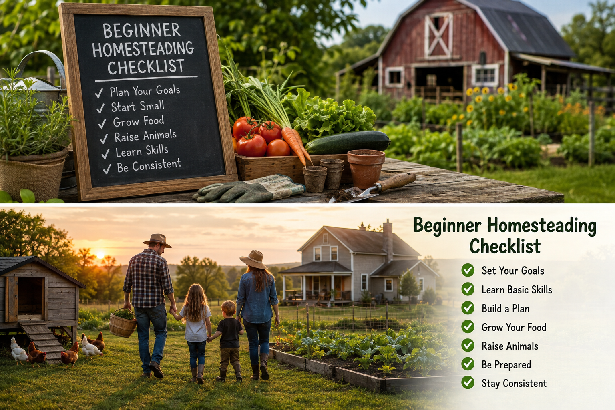
kdolu Beginner homesteading checklist planning can make your first year much easier. Instead of buying everything at once, you can start with a few useful goals, learn basic skills, and grow slowly.
Homesteading does not mean you must own a huge farm. In fact, you can begin on a small backyard, a suburban lot, a rented property where allowed, or several acres in the country. You can grow herbs, raise a few chickens, preserve food, compost kitchen scraps, learn basic repairs, and slowly become more self-reliant.
However, good planning matters.
Many beginners make the same mistake. They see a beautiful garden, chicken coop, greenhouse, orchard, and barn online, and then try to build everything in one season. As a result, they spend too much money and become tired.
Instead, think of homesteading as a collection of small skills.
You do not need to learn everything this year. You only need to learn the next useful skill.
This beginner homesteading checklist gives you a simple path from planning to planting, animals, food storage, tools, safety, budgeting, and long-term growth.
Beginner Homesteading Checklist: Start With Your Main Goal
Before you buy seeds or animals, write down why you want to homestead.
Your reason might be:
- Growing more of your own food
- Reducing grocery costs
- Learning practical skills
- Spending more time outdoors
- Raising healthy food
- Building an emergency food supply
- Living a simpler life
- Teaching children useful skills
- Creating a small farm business
- Becoming less dependent on stores
Your main goal will guide every later choice.
For example, if your main goal is food production, a vegetable garden may be more useful than livestock during your first season. On the other hand, if you want eggs, chickens may become an early priority.
Therefore, write one sentence:
“My main homesteading goal is __________.”
Then add three smaller goals.
This simple step prevents random spending.
Beginner Homesteading Checklist: Know Your Available Space
Next, measure your land.
You do not need a perfect survey at first. A simple sketch will work.
Mark:
- House
- Garage
- Driveway
- Existing trees
- Fences
- Water sources
- Sunny areas
- Shaded areas
- Slopes
- Low spots
- Drainage areas
- Garden space
- Possible animal areas
- Storage areas
Also note where the sun moves during the day.
A garden that looks sunny in the morning may become shaded later. Therefore, watch the property for several days before choosing your main garden location.
If you rent, check your lease first. Also check local rules before keeping livestock, building structures, digging wells, installing fences, or collecting rainwater.
Beginner Homesteading Checklist: Check Local Rules First
Homesteading rules vary by location.
Your local government may have rules about:
- Chickens
- Roosters
- Goats
- Bees
- Pigs
- Ducks
- Compost piles
- Sheds
- Greenhouses
- Fences
- Wells
- Septic systems
- Selling eggs
- Selling produce
- Home food businesses
Therefore, contact your local planning office before building expensive structures.
This step may seem boring, but it can save you from costly mistakes.
If you plan to operate a farm business in the United States, USDA resources for beginning farmers can also help with planning, conservation, loans, crop insurance, and other programs. USDA describes beginning farmers as people who have operated a farm or ranch for 10 years or less for several of its programs.
USDA Beginning Farmers and Ranchers resources
Beginner Homesteading Checklist: Create a Small First-Year Plan
Your first-year plan should be simple.
For example:
Spring
- Prepare garden beds
- Plant easy vegetables
- Start compost
- Build simple storage
- Learn basic animal care
Summer
- Maintain crops
- Harvest vegetables
- Learn food preservation
- Improve fencing
- Track expenses
Fall
- Plant cool-season crops
- Store food
- Clean tools
- Save suitable seeds
- Review your results
Winter
- Plan next year
- Repair equipment
- Study animal care
- Order seeds
- Build only what you truly need
This approach keeps your workload manageable.
Beginner Homesteading Checklist: Set a Realistic Budget
Homesteading can save money, but it can also become expensive.
You may spend money on:
- Seeds
- Soil
- Compost
- Lumber
- Fencing
- Feed
- Animal housing
- Water equipment
- Hand tools
- Storage containers
- Freezers
- Canning supplies
- Protective clothing
- Repairs
Therefore, create three budget levels:
| Category | Starter Budget | Medium Budget | Larger Setup |
| Garden | $50–$150 | $150–$400 | $400+ |
| Basic tools | $50–$150 | $150–$400 | $400+ |
| Compost/soil | $25–$100 | $100–$300 | $300+ |
| Small animal setup | $100–$300 | $300–$800 | $800+ |
| Food storage | $25–$150 | $150–$500 | $500+ |
| Fencing | $50–$300 | $300–$1,000 | $1,000+ |
| Emergency reserve | $100+ | $300+ | $500+ |
These figures are planning examples, not fixed market prices.
Most importantly, keep an emergency fund.
A broken water pump or damaged fence can happen when you least expect it.
Beginner Homesteading Checklist: Build a Basic Tool Kit
Do not buy a giant tool collection.
Start with useful tools.
A basic kit can include:
- Garden gloves
- Hand trowel
- Garden fork
- Shovel
- Rake
- Hoe
- Pruning shears
- Wheelbarrow
- Measuring tape
- Hammer
- Screwdriver set
- Pliers
- Adjustable wrench
- Utility knife
- Level
- Buckets
- Hose
- Hand saw
Buy better tools when possible.
A cheap tool that breaks quickly can cost more over time.
Also, clean tools after use. Sharpen cutting tools when needed. Store everything in one dry place.
Beginner Homesteading Checklist: Learn to Repair Before You Replace
A useful homesteader learns basic repair skills.
You do not need to become a professional builder.
Start by learning how to:
- Tighten loose screws
- Replace a hose washer
- Repair simple fencing
- Fix a garden handle
- Sharpen a blade
- Replace a broken hinge
- Patch small holes
- Build a simple shelf
- Repair a gate latch
- Assemble basic wooden structures
These skills save money and make homesteading less stressful.
However, do not attempt dangerous electrical, gas, structural, or major plumbing work without proper knowledge and local requirements.
Beginner Homesteading Checklist: Test Your Soil
Before planting a large garden, test your soil.
A soil test can tell you useful information about nutrients and soil conditions.
Instead of guessing, use the test results to guide improvements.
You may need:
- Compost
- Organic matter
- Lime
- Specific nutrients
- Better drainage
- Different crops
Do not add large amounts of fertilizer simply because someone online recommends it.
Your soil is unique.
Local extension services can often provide useful information for your region, including planting times, soil care, pests, and crop choices.
Beginner Homesteading Checklist: Choose Easy Garden Crops
Your first garden should not contain 30 different crops.
Choose vegetables that fit your climate and cooking habits.
Good beginner choices often include:
- Radishes
- Lettuce
- Beans
- Peas
- Cucumbers
- Zucchini
- Tomatoes
- Green onions
- Potatoes
- Carrots
- Herbs
However, the best crops depend on your local climate.
Start with five to eight crops.
Then grow more after you understand your space.
A small garden that you maintain well is better than a huge garden that becomes covered with weeds.
Beginner Homesteading Checklist: Make a Simple Garden Map
Draw your garden on paper.
Label each bed.
For example:
Bed 1: Tomatoes and basil
Bed 2: Beans
Bed 3: Carrots and onions
Bed 4: Cucumbers
Bed 5: Lettuce and herbs
Keep notes about planting dates.
Also record:
- Germination
- Harvest dates
- Pest problems
- Water needs
- Best varieties
- Poor varieties
After one season, these notes become extremely valuable.
Beginner Homesteading Checklist: Plan Your Water System
Water is one of the most important parts of a homestead.
Your garden, animals, trees, and household all need reliable water.
Consider:
- Outdoor taps
- Hoses
- Water barrels where legal
- Drip irrigation
- Watering cans
- Animal water containers
- Backup water storage
Do not place your main garden too far from your water source.
Carrying buckets across a large property every day becomes exhausting.
Instead, make watering easy.
Beginner Homesteading Checklist: Start Composting Simply
Compost turns organic waste into useful soil material.
You can begin with a basic pile or bin.
Common compost materials include:
Green materials
- Vegetable scraps
- Fresh grass
- Plant trimmings
Brown materials
- Dry leaves
- Straw
- Untreated cardboard
- Small dry branches
Avoid adding materials that can create pest or health problems.
Turn the pile when needed, keep it reasonably moist, and give it time.
You do not need an expensive compost machine.
Beginner Homesteading Checklist: Learn Natural Soil Building
Healthy soil supports healthy plants.
Over time, you can improve soil by adding organic matter and protecting the ground.
Useful practices include:
- Composting
- Mulching
- Cover crops
- Crop rotation
- Reducing unnecessary soil disturbance
- Keeping soil covered
- Adding mature organic matter
Do not expect poor soil to become perfect overnight.
Soil improvement is a long-term project.
Beginner Homesteading Checklist: Decide Whether You Need Animals
Animals are rewarding, but they also create daily work.
Before buying livestock, ask:
- Can I feed them every day?
- Can I provide clean water?
- Do I have safe housing?
- Can I pay for veterinary care?
- Can I protect them from predators?
- What will I do during vacations?
- What happens during extreme weather?
- Can I legally keep them?
If you cannot answer these questions, wait.
Plants can survive a missed day more easily than animals can.
Beginner Homesteading Checklist: Consider Chickens Carefully
Chickens are popular with beginners because they can provide eggs, manure, entertainment, and useful pest control.
However, chickens require daily care.
You need:
- Secure coop
- Predator protection
- Nesting space
- Perches
- Feed
- Clean water
- Bedding
- Shade
- Ventilation
- Safe outdoor space
Also, poultry can carry germs even when birds appear healthy. CDC guidance recommends washing hands after touching poultry or their environment and keeping poultry equipment outside the home.
CDC backyard poultry safety guidance
Beginner Homesteading Checklist: Protect Chickens From Predators
Predators may include:
- Dogs
- Foxes
- Raccoons
- Snakes
- Birds of prey
- Other wild animals
A secure enclosure matters more than a beautiful coop.
Check for:
- Holes
- Weak doors
- Loose fencing
- Gaps near the ground
- Unprotected windows
Walk around the coop regularly.
A tiny opening can become a major problem.
Beginner Homesteading Checklist: Learn Basic Animal Health
You should know the normal behavior of your animals.
Watch for:
- Lack of appetite
- Weakness
- Unusual breathing
- Injury
- Changes in droppings
- Isolation
- Sudden behavior changes
Keep basic records.
Write down:
- Animal name or number
- Purchase date
- Vaccinations where applicable
- Health concerns
- Treatments advised by a veterinarian
- Egg or production records
When something looks wrong, contact a qualified veterinarian or local animal-health expert.
Beginner Homesteading Checklist: Keep Animal Areas Clean
Clean housing reduces many problems.
Create a routine for:
- Removing dirty bedding
- Cleaning water containers
- Checking feeders
- Checking fences
- Removing spoiled feed
- Inspecting shelters
Keep animal tools separate from kitchen tools.
This is especially important with poultry.
CDC guidance advises keeping poultry and their supplies outside the home and washing hands after handling birds or their living areas.
Beginner Homesteading Checklist: Grow Herbs for Quick Wins
Herbs can give beginners an early success.
Try:
- Basil
- Mint
- Parsley
- Chives
- Rosemary
- Thyme
- Cilantro
However, mint can spread quickly, so consider growing it in a container.
Herbs also take less room than many large vegetables.
Therefore, they work well for small homesteads.
Beginner Homesteading Checklist: Plant a Small Food Forest
Do not rush into planting dozens of fruit trees.
Start with one or two trees that suit your climate.
Consider:
- Apples
- Pears
- Peaches
- Plums
- Figs
- Citrus
- Mulberries
The correct choice depends heavily on your region.
Learn about chill hours, soil, pollination, pests, and mature tree size before planting.
Remember that fruit trees may take years to provide meaningful harvests.
Beginner Homesteading Checklist: Learn Seed Starting
Starting plants from seed can reduce costs.
You need:
- Seeds
- Clean containers
- Seed-starting mix
- Light
- Water
- Labels
Do not overwater.
Also, provide enough light.
Weak seedlings often stretch toward a window because they do not receive enough light.
Start with a few varieties rather than filling your home with hundreds of seedlings.
Beginner Homesteading Checklist: Understand Food Preservation
Growing food is only half the job.
You also need to use the harvest.
Food preservation options include:
- Freezing
- Drying
- Pickling
- Canning
- Fermenting
- Cool storage
The National Center for Home Food Preservation provides research-based guidance for these methods.
National Center for Home Food Preservation
Do not use random social-media canning instructions.
For canning especially, follow tested recipes and methods.
The center warns that unsafe or untested procedures can create serious food-safety risks.
Beginner Homesteading Checklist: Learn Freezing First
Freezing is often one of the easiest preservation methods.
You can freeze:
- Berries
- Vegetables
- Herbs
- Prepared meals
- Some meats
- Fruit
Label every package with:
- Food name
- Date
- Quantity
Rotate older food first.
The National Center for Home Food Preservation explains that freezing slows microbial growth but does not sterilize food.
Beginner Homesteading Checklist: Learn Safe Canning
Canning is useful, but safety must come first.
Learn the difference between:
- Water-bath canning
- Pressure canning
Low-acid foods such as many vegetables and meats require careful processing.
The National Center for Home Food Preservation lists pressure-canning temperatures and explains the differences between food types and preservation methods.
Do not improvise processing times.
Do not guess.
Do not treat a viral recipe as a safety guide.
Instead, use tested sources.
Beginner Homesteading Checklist: Build a Small Pantry
A homestead pantry does not need to look like a supermarket.
Start with foods your household already eats.
Consider storing:
- Rice
- Beans
- Flour
- Oats
- Pasta
- Salt
- Sugar
- Cooking oil
- Spices
- Dried vegetables
- Home-preserved foods
Use older products first.
Keep food in a cool, dry, clean area.
For home-canned foods, the National Center for Home Food Preservation recommends labeling and dating jars and storing them in a clean, cool, dark, dry place.
Beginner Homesteading Checklist: Learn Drying and Dehydrating
Drying can reduce food volume and extend storage life.
You can dry:
- Apples
- Bananas
- Herbs
- Some vegetables
- Fruit leather
- Certain meats using proper tested procedures
However, dried food still needs correct storage.
The National Center for Home Food Preservation recommends protecting dried food from moisture and insects and storing it in clean, dry, suitable containers.
Beginner Homesteading Checklist: Create an Emergency Food Plan
Your homestead should have a backup plan.
Ask:
What happens if the garden fails?
Possible problems include:
- Drought
- Flooding
- Insects
- Plant disease
- Storms
- Extreme heat
- Animal illness
- Power outages
Therefore, do not depend on one food source.
Grow several crops.
Store some purchased food.
Keep seeds.
Learn preservation.
Build relationships with local farmers.
This creates resilience.
Beginner Homesteading Checklist: Keep Records From Day One
A notebook may become one of your most valuable homesteading tools.
Record:
- Planting dates
- Harvest amounts
- Seed varieties
- Animal costs
- Feed costs
- Repairs
- Weather
- Pest problems
- Preservation dates
- Grocery savings
- Failed experiments
At the end of the year, review the notebook.
You will quickly see what worked.
You will also see what wasted money.
Beginner Homesteading Checklist: Track Your Real Costs
Homesteading is not automatically cheaper.
For example, imagine spending $500 on a chicken setup and feed during the first year.
If you produce $250 worth of eggs, you did not immediately save $250.
However, you gained:
- Skills
- Equipment
- Experience
- Compost materials
- Future production capacity
Therefore, think about long-term value instead of only first-year savings.
Beginner Homesteading Checklist: Choose One Main Project
A powerful beginner rule is:
One major project at a time.
For example:
Month 1: Garden
Month 2: Compost
Month 3: Chickens
Month 4: Food preservation
Do not build a barn, orchard, greenhouse, chicken coop, pond, and large garden simultaneously.
Small wins build confidence.
Beginner Homesteading Checklist: Build a Weekly Routine
Homesteading becomes easier when you create routines.
Daily
- Check animals
- Check water
- Look at plants
- Collect eggs if applicable
- Check weather
Weekly
- Weed garden
- Clean animal areas
- Check fences
- Inspect tools
- Record harvests
- Plan meals
Monthly
- Review expenses
- Inspect buildings
- Check stored food
- Clean storage
- Plan upcoming work
A routine reduces forgotten tasks.
Beginner Homesteading Checklist: Learn Basic Cooking Skills
Food independence is not only about growing food.
You should also know how to cook simple meals.
Learn:
- Bread making
- Soup
- Rice
- Beans
- Vegetable dishes
- Basic sauces
- Eggs
- Simple preserved-food recipes
Use your garden around meals you already enjoy.
That way, you are more likely to eat what you grow.
Beginner Homesteading Checklist: Reduce Household Waste
Homesteading often teaches you to use things more carefully.
You can reduce waste by:
- Composting scraps
- Repairing tools
- Reusing containers
- Saving suitable seeds
- Using food leftovers
- Buying durable items
- Repurposing safe materials
However, do not reuse containers for food if the material is not designed for that purpose.
Food safety always comes first.
Beginner Homesteading Checklist: Create a Simple Storage Area
You need a place for supplies.
Use shelves or cabinets for:
- Seeds
- Tools
- Jars
- Animal supplies
- Gardening items
- Cleaning supplies
Label boxes.
Keep chemicals away from food.
Store sharp tools safely.
Keep heavy objects low.
Good storage makes daily work much easier.
Beginner Homesteading Checklist: Prepare for Bad Weather
Weather can change your plans quickly.
Prepare for:
- Heavy rain
- High winds
- Heat
- Cold
- Drought
- Flooding
Protect young plants when necessary.
Secure loose structures.
Keep animal water available.
Store emergency feed where appropriate.
Have backup lighting.
Know where you will move animals if severe weather threatens.
Beginner Homesteading Checklist: Learn Basic First Aid and Safety
Homesteading involves tools, animals, heat, soil, water, and machinery.
Therefore, safety must be part of your plan.
Keep a first-aid kit available.
Also keep:
- Work gloves
- Eye protection
- Hearing protection when needed
- Proper footwear
- Sun protection
- Clean drinking water
Teach children that tools and animals require rules.
Do not let young children use dangerous equipment without close adult supervision.
Beginner Homesteading Checklist: Make a Family Work Plan
If several people live on the homestead, divide tasks.
For example:
Person A
- Garden watering
- Harvesting
Person B
- Animal feeding
- Egg collection
Children
- Picking easy vegetables
- Filling safe water containers
- Collecting small tools
Change jobs sometimes so everyone learns different skills.
This also prevents one person from doing every task.
Beginner Homesteading Checklist: Learn From Local Experts
Online videos can help, but local knowledge is often better.
Look for:
- Cooperative Extension programs
- Gardening clubs
- Local farmers
- Seed exchanges
- Community gardens
- Agricultural classes
- Farm tours
- Livestock groups
USDA also provides programs and resources for beginning farmers, including planning, education, technical assistance, conservation, and financial support.
USDA Beginning Farmer resources
Beginner Homesteading Checklist: Learn From Your Mistakes
Failure is normal.
A tomato plant may die.
Seeds may fail.
A fence may break.
Chickens may escape.
A crop may produce less than expected.
That does not mean you failed at homesteading.
Instead, ask:
What happened?
Why did it happen?
What will I change next time?
This mindset turns mistakes into skills.
Beginner Homesteading Checklist: Understand the Advantages
Homesteading can offer many benefits.
More food control
You know more about how some of your food was produced.
Practical skills
You learn gardening, cooking, repairs, preservation, and animal care.
Outdoor time
Many homesteading tasks involve fresh air and movement.
Family learning
Children can learn where food comes from.
Potential savings
Growing and preserving some foods may reduce grocery purchases.
Emergency readiness
Stored food and practical skills can help during disruptions.
Personal satisfaction
There is something rewarding about eating food you helped grow.
Beginner Homesteading Checklist: Understand the Disadvantages
Homesteading also has downsides.
It takes time
Plants need care.
Animals need daily care.
It can cost money
Tools, fencing, feed, and supplies add up.
It can be physically demanding
Digging, lifting, carrying, and cleaning take effort.
Weather can ruin plans
A storm can damage months of work.
Animals create responsibility
You cannot simply stop caring for livestock.
Learning takes time
You will make mistakes.
Projects can become overwhelming
Too many projects can cause burnout.
Therefore, start small.
Real-Life Example: A Family Starts With a Small Garden
Consider a family with a modest backyard.
Instead of buying chickens, goats, fruit trees, and a greenhouse immediately, they begin with four raised beds.
They plant:
- Tomatoes
- Beans
- Lettuce
- Herbs
They also start composting.
During the first year, they discover that tomatoes grow well but lettuce struggles in summer heat. They record this information.
The next year, they plant more tomatoes and move lettuce to a cooler season.
This is a realistic example of how successful homesteading often develops.
They did not build everything at once.
They learned first.
Case Study: Turning a Failed Garden Into a Better System
Imagine another beginner who plants a large garden but cannot keep up with watering.
The first season becomes difficult.
Instead of abandoning the idea, the homesteader reduces the garden size and improves the watering system.
The next season, they grow fewer crops but produce more usable food.
The lesson is important:
A smaller system that you can maintain is often better than a large system that controls your life.
Expert Advice: Think Like a Small Farmer
One of the best ways to approach homesteading is to think in systems.
Ask how each part supports another.
For example:
Kitchen scraps → compost → garden → vegetables → meals → food scraps → compost
Another system might be:
Garden → harvest → preservation → pantry → meals
A healthy system reduces waste.
However, keep the system simple enough to manage.
USDA resources for beginning farmers emphasize planning, education, risk management, and informed decision-making.
Beginner Homesteading Checklist: Your Printable Starter List
Use this final list as your first-year guide.
Land and planning
- Write your main goal
- Measure your available space
- Draw a basic property map
- Check local rules
- Identify sunlight areas
- Identify water sources
- Check drainage
- Create a first-year plan
Money
- Create a startup budget
- Set an emergency fund
- Track every expense
- Avoid unnecessary equipment
- Compare repair versus replacement costs
Garden
- Test soil
- Choose beginner crops
- Buy quality seeds
- Prepare garden beds
- Plan watering
- Start compost
- Keep planting records
- Record harvests
Animals
- Check local laws
- Research animal needs
- Build secure housing
- Plan feed
- Plan clean water
- Find veterinary support
- Prepare predator protection
- Create an emergency animal plan
Food preservation
- Learn freezing
- Learn drying
- Study safe canning
- Buy suitable storage containers
- Label preserved food
- Rotate stored food
- Keep reliable preservation references
Skills
- Learn basic gardening
- Learn basic cooking
- Learn composting
- Learn simple repairs
- Learn food preservation
- Learn animal care
- Learn tool safety
- Learn basic emergency planning
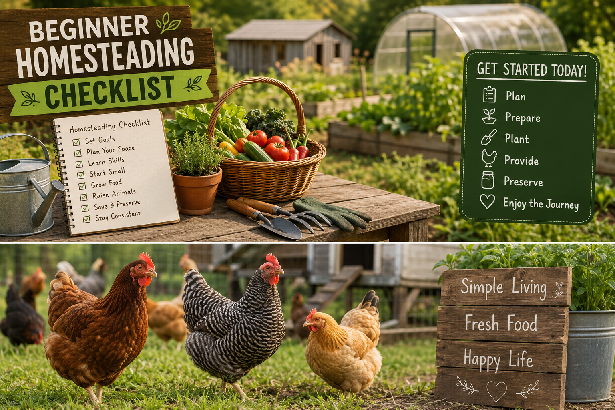
Frequently Asked Questions About Homesteading
- What is the best way to start homesteading?
The best way to start is slowly. Begin with one garden, a compost system, or another small project. Learn how it works before adding more.
- Do I need a lot of land to homestead?
No. You can homestead on a small property. Herbs, vegetables, composting, food preservation, and even some animals can work in limited spaces where local rules allow them.
- How much money does homesteading require?
There is no single amount. You can start cheaply with seeds, containers, composting, and basic hand tools. Larger livestock and buildings require much more money.
- What should I grow first?
Start with vegetables that grow well in your climate and that your family already eats. Beans, herbs, lettuce, radishes, and some tomatoes are common beginner choices.
- Are chickens good for beginner homesteaders?
They can be, but chickens require daily care. You need safe housing, clean water, feed, predator protection, and a plan for illness and emergencies.
- How many chickens should a beginner get?
Start with a small flock if local rules allow it. The exact number depends on your space, egg needs, local regulations, and ability to provide proper care.
- Is homesteading cheaper than buying food?
Sometimes, but not always. Initial equipment can cost money. Savings usually improve when you use your equipment for several years and grow foods that are expensive to buy.
- Should I buy a tractor?
Usually not at the beginning. A tractor can be expensive and unnecessary for a small property. Start with hand tools and rent or borrow larger equipment when needed.
- What is the most important homesteading skill?
There is no single answer. Gardening, food preservation, cooking, animal care, repair skills, and planning are all valuable.
- How can I avoid homesteading burnout?
Keep your first year small. Choose one or two major projects. Build routines, share work with family, and leave time for rest.
- Should I start with livestock or a garden?
For many beginners, a small garden is easier because animals require daily care. However, your goals and property may make livestock a better first choice.
- How do I learn food preservation?
Use reliable sources and take a class if possible. The National Center for Home Food Preservation offers research-based guidance on canning, freezing, drying, pickling, fermenting, and storage.
- Is homemade canned food safe?
It can be safe when you use tested recipes and correct processing methods. However, unsafe methods can create serious health risks. Do not guess processing times.
- How do I start composting?
Start with a small pile or bin. Combine suitable green and brown materials, keep the pile reasonably moist, and give it time to break down.
- What tools should a beginner buy?
Start with a shovel, rake, garden fork, hoe, hand trowel, pruning shears, gloves, buckets, wheelbarrow, hammer, screwdriver set, and basic repair tools.
- How long does it take to become self-sufficient?
There is no fixed timeline. Complete self-sufficiency is difficult for most people. Instead, aim to become more independent in one area at a time.
- Can I homestead while working a full-time job?
Yes. However, you should design the homestead around your available time. A small garden may work better than livestock if you are away from home for long periods.
- What should I do if my first garden fails?
Study the cause instead of giving up. Check water, sunlight, soil, pests, planting dates, and crop selection. Then try again with a smaller or improved plan.
- Is it necessary to grow all my own food?
No. Homesteading does not have to mean total self-sufficiency. Even growing herbs, vegetables, or fruit can make a meaningful difference.
- What is the biggest beginner mistake?
Trying to do too much too quickly is one of the biggest mistakes. Start small, learn the system, track results, and expand only when your current projects are manageable.
Beginner Homesteading Checklist: A Simple 12-Month Roadmap
Here is a practical year-one schedule.
| Month | Main Goal | Suggested Tasks |
| 1 | Planning | Set goals, check rules, create budget |
| 2 | Property | Map land, sunlight, water, storage |
| 3 | Garden | Test soil and prepare beds |
| 4 | Planting | Start easy crops |
| 5 | Maintenance | Weed, water, mulch, record progress |
| 6 | Harvest | Pick crops and learn preservation |
| 7 | Animals | Research livestock carefully |
| 8 | Skills | Practice repairs and food storage |
| 9 | Fall crops | Plant suitable seasonal vegetables |
| 10 | Storage | Organize pantry and tools |
| 11 | Review | Calculate costs and harvests |
| 12 | Planning | Choose next year’s improvements |
The schedule should change with your climate.
A Practical Beginner Homesteading Checklist for Different Property Sizes
Small backyard
Focus on:
- Herbs
- Containers
- Raised beds
- Compost
- Small fruit plants
- Food preservation
- Basic repairs
Medium property
You can consider:
- Larger gardens
- Fruit trees
- Chickens
- More composting
- Greenhouses
- Larger storage
- Rainwater systems where legal
Larger rural property
You may eventually explore:
- Pasture
- Larger livestock
- Orchards
- Woodlots
- Larger gardens
- Farm equipment
- Multiple water systems
- Small farm sales
However, bigger land also means more work.
More land is not automatically better.
Beginner Homesteading Checklist: What Not to Buy First
Avoid buying these items until you know you need them:
- Large tractor
- Huge greenhouse
- Expensive chicken coop
- Industrial canning equipment
- Large livestock trailer
- Massive seed collection
- Specialized machinery
- Too many animals
- Expensive smart farming equipment
First, prove that the project fits your life.
Then invest.
Beginner Homesteading Checklist: Smart Ways to Save Money
You can reduce costs by:
- Buying quality used tools.
- Borrowing specialty equipment.
- Sharing equipment with neighbors.
- Starting seeds when practical.
- Saving suitable seeds.
- Building simple storage.
- Repairing equipment.
- Buying only useful supplies.
- Growing foods you already eat.
- Preserving surplus harvests.
However, never sacrifice safety to save money.
A weak fence can be more expensive than a strong fence if animals escape.
Unsafe food preservation can be far more costly than buying proper equipment.
Beginner Homesteading Checklist: Your First 10 Skills
If you feel overwhelmed, learn these ten skills first:
- Growing vegetables
Learn soil, planting, watering, weeds, and harvesting.
- Composting
Learn how organic materials break down.
- Cooking
Learn simple meals from basic ingredients.
- Food preservation
Start with freezing or another simple method.
- Tool care
Clean, sharpen, and store tools correctly.
- Basic repairs
Learn simple fixes around your property.
- Animal care
Understand feeding, water, housing, and warning signs.
- Record keeping
Track money, crops, animals, and results.
- Planning
Break large goals into small jobs.
- Problem solving
Learn to ask why something failed and what you can change.
These skills become the foundation for bigger projects.
Expert Advice: Build Skills Before Buildings
A common online image of homesteading focuses on beautiful buildings.
But buildings do not create a homestead.
Skills do.
You can own a greenhouse and still struggle to grow plants.
You can own chickens and still struggle with animal care.
You can own canning jars and still not know safe preservation methods.
Therefore, put learning before buying.
The USDA’s beginning-farmer resources similarly emphasize planning, education, technical assistance, risk management, and informed decisions.
Beginner Homesteading Checklist: Your Long-Term Homestead Vision
After your first year, you may want to expand.
Your five-year vision might include:
- Larger vegetable garden
- Orchard
- Chickens
- Beehives
- Greenhouse
- Food storage room
- Better water system
- Larger compost system
- More preservation skills
- Small farm sales
- Workshop
- Improved fencing
But do not promise yourself that everything must happen.
Your homestead should support your life.
It should not become a machine that consumes every free hour.
Final Beginner Homesteading Checklist
The most important lesson is simple: start small and build slowly.
You do not need to grow all your food.
You do not need dozens of animals.
You do not need expensive machinery.
You do not need hundreds of acres.
You need a clear goal, a manageable plan, basic tools, reliable information, and the willingness to learn.
Use this beginner homesteading checklist as a starting point rather than a strict rulebook. Your climate, property, budget, family, and goals will determine what works best.
Start with one garden bed.
Learn to grow one crop well.
Preserve one harvest.
Repair one thing.
Learn one new skill.
Then repeat.
Over time, those small actions become a real homestead.
The strongest homesteads are not built in one weekend. Instead, they grow year after year through good planning, careful work, useful skills, and patience.
External Resources for Further Learning
- USDA Beginning Farmers and Ranchers: USDA provides information about planning farm operations, programs, education, conservation, and other resources for people starting agricultural operations.
Visit USDA Beginning Farmers and Ranchers - National Center for Home Food Preservation: A strong research-based resource for canning, freezing, drying, pickling, fermenting, and storing food.
Visit the National Center for Home Food Preservation - CDC Backyard Poultry Safety: Useful safety guidance for people keeping chickens, ducks, geese, and other backyard poultry.
Read CDC backyard poultry safety guidance - USDA Beginning Farmer Loans: Information about USDA Farm Service Agency programs that may help eligible beginning farmers with ownership, operating, and microloan needs.
Learn about USDA Beginning Farmer and Rancher Loans


