
 kdolu
kdolu What does collate mean when printing? Printing documents often comes with several options that can confuse even experienced users. One such option is “Collate”. But what does collate mean when printing?
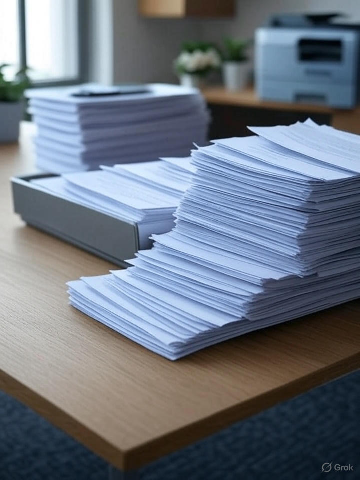
In simple terms, collate means printing your pages in the correct order. Instead of printing all copies of page 1, then all copies of page 2, collating ensures each copy of the document is stacked page by page, like a properly assembled book. This makes handing out, binding, or reading your document easier and more organized.
In this guide, you’ll learn everything about collating—from its history and benefits to real-life examples, industry applications, and expert tips.
The History of Collated Printing: From Manual Sorting to Digital Ease
Collating might seem like a modern convenience, but it has centuries of history. Before printing presses, scribes manually sorted handwritten or early printed pages into correct sequences. This task was time-consuming, error-prone, and often required multiple assistants.
When the printing press emerged in the 15th century, pages were still printed separately and then manually gathered. Bookbinders would collate signatures (folded sheets) into books—a process that could take hours.
By the 20th century, mechanical collating trays in copiers and printers streamlined this process. Office workers no longer shuffled stacks of paper manually.
Today, digital printers and copiers can collate, staple, hole-punch, and bind documents with a single click—turning hours of labor into minutes.
Takeaway: Collating evolved from a labor-intensive manual task into an effortless, automated function that enhances productivity.
How Printers Physically Collate Pages: A Behind-the-Scenes Look
Ever wondered what happens when you press “Print” with collate selected? It’s more than meets the eye. Most printers follow a smart sequence to ensure pages stay in order:
- Page Sequence Tracking
The printer records each page number and prints complete sets (1 through last page) before starting the next copy. - Output Trays and Sensors
Sensors detect page placement to stack each set neatly without misalignment. - Finishing Features
Advanced printers can staple, hole-punch, or bind collated sets automatically. - Error Prevention
If a jam occurs, printers restart from the interrupted page, maintaining order and avoiding duplication.
Tip: Next time you print a long report, watch the output tray—you’ll see collated sets appear sequentially, almost like magic.
Collating for E-Books vs. Printed Books: Does It Matter?
Printed Books
For physical books, manuals, and reports, collating is essential. Without it, pages can appear out of order, confusing readers. For instance, imagine a textbook with Chapter 5 before Chapter 2—collation avoids such chaos.
E-Books
Digital formats don’t require physical sorting, but digital collation matters. Publishers must ensure:
- Chapters are ordered correctly
- Tables of contents link accurately
- Page breaks are consistent
Example: A university released a course handbook in print and digital formats. The printed version had pages 40–60 out of order, while the e-book had broken links. Both caused complaints, proving collation is important in both formats.
How Collating Saves Time in Busy Offices: Productivity Studies
Collated printing can drastically reduce time spent on repetitive tasks:
- Time Saved: Automated collating reduces manual sorting time by up to 80%. A law firm printing 50 copies of a 40-page contract no longer spends hours sorting; the printer does it in minutes.
- Reduced Human Error: Manual collation often leads to missing pages or mixed sets, but automation ensures accuracy.
Case Study: A financial services company compared teams:
- Manual printing + sorting → 3 hours, errors likely
- Collated printing → 30 minutes, zero errors
Benefits in High-Volume Industries:
- Faster turnaround
- Reduced paper waste
- Happier staff and clients
Fun Fact: 67% of employees reported that automated features like collating reduce stress and improve project efficiency (HP survey).
The Psychology of Order: Why Collated Pages Reduce Human Errors
Humans naturally prefer order. Collated pages reduce cognitive load, preventing errors like misreading or skipping instructions.
Real-Life Applications
- Healthcare: Nurses rely on collated patient files to avoid mistakes.
- Education: Students perform better with collated exam papers.
- Business: Collated agendas streamline meetings and reduce confusion.
Expert Insight: Dr. Susan Weinschenk notes that organized information reduces mistakes by 30%, demonstrating why collated printing aligns with how the brain processes information.
Environmental Benefits of Collated Printing: Less Waste, More Efficiency
Collated printing is not just convenient—it’s eco-friendly:
- Less Paper Waste: Fewer reprints from misplaced pages.
- Lower Ink and Energy Use: Collation reduces unnecessary printing cycles.
- Reduced Transportation Waste: Prevents recalls of misprinted books or reports.
Example: A small office reduced monthly paper waste by 15% simply by switching to collated printing.
Expert Opinion: The Environmental Paper Network highlights that reducing printing waste by 10% globally could save millions of trees. Collated printing contributes directly to this goal.
When NOT to Use Collated Printing: Situations That Waste Time
- Single-Page Documents – Collation is unnecessary.
- Large Batches of Unrelated Pages – Sorting by hand may be faster.
- Quick Drafts – No need to collate temporary copies.
- Posters/Marketing Materials – Single-page outputs don’t benefit.
- Automated Sorting Workflows – Collating may slow down production.
Example: A university collated 1,500 single-page exams unnecessarily, doubling printing time.
Collated Printing in Legal and Healthcare Industries
Legal Industry
- Multi-page contracts, case files, and court documents must stay in order.
- Example: A law firm submitted uncollated contracts, delaying client signings.
Healthcare Industry
- Patient files, lab results, and consent forms rely on correct sequencing.
- Example: A hospital reduced misplaced pages by 50% after implementing collated printing.
| Industry | Collating Benefits |
| Legal | Accurate contracts, error-free case files, efficient client handling |
| Healthcare | Complete patient records, fewer medical errors, faster staff access |
Collated Printing and Binding: How They Work Together
Collating ensures pages are in order, while binding secures them. Common binding methods include:
- Stapling – Short reports, exams
- Spiral/Coil Binding – Training manuals, cookbooks
- Booklet Folding – Mini-books, brochures
- Comb/Thermal Binding – Professional reports, proposals
Example: A publisher avoided binding errors by switching to collated printing, completing 500 manuals in a single day.
Step-by-Step Guide: How to Turn Collate On or Off in Different Printers
Windows
- Open document → Ctrl + P → Copies section
- Check/uncheck Collate → Print
Mac
- File → Print → Copies & Pages → Collate → Print
Office Copiers
- Touchscreen → Finishing/Output → Collate/Sort → On
- Optional: Staple or hole-punch
PDFs
- Open in Adobe Acrobat → File → Print → Check Collate → Print
Tips: Preview, use high-quality paper, match duplex settings, save presets for recurring jobs.
Future of Collated Printing: AI and Smart Printers
AI-Powered Collating
- Detect document type automatically
- Predict errors before printing
- Adjust print order dynamically
Smart Printers & IoT
- Track patterns and suggest collating for large jobs
- Auto-switch for recurring documents
- Notify users of jams or errors
Cloud-Based Collation
- Remote printing arrives pre-collated
- Multiple sets managed without misordering
Example: A multinational company used AI printers to collate 1,200-page reports automatically, saving an entire workday.
Collated vs. Booklet Printing: What’s the Difference?
| Feature | Collated Printing | Booklet Printing |
| Purpose | Keep pages in order | Arrange pages for folded mini-books |
| Layout | None | Repositioned for folding |
| Binding | Optional | Usually folded/stapled |
| Ideal Use | Reports, manuals, exams | Brochures, handbooks, catalogs |
Tip: Decide whether you need collated pages or booklets. Often, you collate first, then fold or bind.
Real-Life Failures: When Uncollated Printing Caused Problems
Corporate Annual Reports: 1,000 uncollated copies → financial tables misaligned → reprint needed
University Exams: Multi-page exams printed uncollated → rescheduling required
Legal Contracts: 50-page contracts printed uncollated → clients received missing clauses
Hidden Costs Table
| Cost Type | Example |
| Time | Manual sorting |
| Paper & Ink | Reprinting |
| Reputation | Perceived sloppiness |
| Operational Delays | Meetings/exams postponed |
Collated Printing for Students: Tips for Homework, Projects, and Exams
- Homework: Ensures sequential submission
- Projects: Keeps multi-section reports complete
- Exams: Prevents missing pages
Tips:
- Check page numbers
- Turn collate ON
- Combine with double-sided printing
- Consider binding for important work
- Preview before printing
Example: A student submitted 3 complete collated copies of a 20-page research paper—no reprints needed.
Quick Reference: Collated vs. Uncollated Printing
| Printing Type | Example Order (3 copies of 4 pages) | Best Use Case |
| Collated | 1-2-3-4, 1-2-3-4, 1-2-3-4 | Booklets, reports, homework |
| Uncollated | 1-1-1, 2-2-2, 3-3-3, 4-4-4 | Posters, flyers, single-page handouts |
Advantages of Collated Printing
- Saves time
- Ensures order in multi-page projects
- Looks professional
- Easy distribution
Disadvantages
- Slightly longer printing time for many copies
- Large jobs may challenge some printers
- Unnecessary for single-page prints
Expert Advice: When to Use Collated Printing
- Multi-page documents needing sequential reading
- Avoid for single-page flyers or drafts
- Always preview before printing
Case Study: Teacher printing 30 copies of 5-page exams saved 60 minutes using collate.
Collated Printing in Home and Workplace
Office Uses: Handouts, reports, legal docs, training manuals
Home Uses: Recipes, newsletters, photo albums, kids’ activity books
Related Terms: Duplex printing, stapling, finishing
Common Mistakes: Forgetting collate, using it for single-page prints, ignoring number of copies
Case Study: Collating in a School Environment
A teacher prints 30 copies of a 5-page exam.
- Without collating, she ends up with 30 piles of Page 1, 30 piles of Page 2, and so on. She spends an hour sorting.
- With collating, she gets 30 ready-to-hand exams. Time saved: 60 minutes.
This real-world case shows why collating is a small but powerful tool.
Digital Printing vs. Traditional Printing: Does Collate Still Matter?
Yes! Even in today’s world of PDFs and e-books, collated printing matters. Offices, schools, and even print shops still rely on collated copies for easy reading and sharing.
Collated Printing in the Workplace
In offices, collating is often used for:
- Meeting handouts
- Annual reports
- Legal documents
- Training manuals
Without collating, employees waste time sorting stacks, which lowers productivity.
Collating in Home Printing
Even at home, collating helps when printing:
- Recipe collections
- Family newsletters
- Photo albums
- Kids’ activity books
It keeps projects neat and saves you from mixing up pages.
Related Printing Terms You Should Know
- Duplex Printing → Printing on both sides of the paper.
- Stapling → Binding collated pages together.
- Finishing → Extra touches like folding or trimming.
Common Mistakes People Make With Collated Printing
- Forgetting to select “Collate” before printing.
- Printing collated for single-page flyers (wastes time).
- Not checking the number of copies before clicking print.

FAQs About What Does Collate Mean When Printing?
- What does “collate” mean in printing?
Answer: Collate means arranging printed pages in the correct sequence so each copy of a multi-page document is complete and in order.
- Why should I use collate when printing?
Answer: Collating saves time, prevents mistakes, and ensures every copy of a document is correctly ordered.
- What happens if I print without collate?
Answer: The printer prints all copies of page 1 first, then page 2, and so on. You would need to manually sort the pages into sets.
- Is collate important for single-page documents?
Answer: No. For single-page documents, collating has no effect because each copy has only one page.
- Can collate be used for double-sided printing?
Answer: Yes. Most printers can collate multi-page double-sided documents, keeping the order correct for each copy.
- Does collate work for both Windows and Mac?
Answer: Yes. Both Windows and Mac operating systems have a collate option in the print dialog box.
- How do I turn collate on in Windows?
Answer: Open your document → File → Print → Copies section → Check the Collate box → Print.
- How do I turn collate on a Mac?
Answer: Open your document → File → Print → Look for Collate under Copies & Pages → Select it → Print.
- Can I collate PDFs?
Answer: Yes. Most PDF readers, like Adobe Acrobat, allow you to select Collate when printing multiple copies.
- What types of documents need collating most?
Answer: Multi-page reports, manuals, contracts, exams, and booklets benefit most from collating.
- Can collate prevent mistakes in legal documents?
Answer: Absolutely. Collating ensures contracts or case files stay in order, reducing the risk of errors.
- Is collate useful in schools?
Answer: Yes. It helps students and teachers keep homework, projects, and exams in proper order.
- How does collate save time in offices?
Answer: It automatically arranges pages, so employees don’t have to manually sort multiple copies.
- Can collate reduce paper waste?
Answer: Yes. By printing in order, there’s less need to reprint due to errors or misplaced pages.
- Do all printers have a collate feature?
Answer: Most modern printers and copiers have a collate option, but some older models may not.
- Can I collate large print jobs automatically?
Answer: Yes. High-end printers and copiers can handle hundreds or thousands of pages with collated output.
- What is the difference between collated printing and booklet printing?
Answer: Collated printing arranges pages in order, while booklet printing arranges pages for folding into mini-books.
- Is collate important for e-books?
Answer: While e-books are digital, proper collation at the publishing stage ensures chapters and pages display correctly.
- What industries rely most on collated printing?
Answer: Legal, healthcare, education, corporate offices, and publishing industries use collated printing extensively.
- How does collate improve professional appearance?
Answer: It ensures multi-page documents are complete, correctly ordered, and ready for distribution.
- Can collate work with stapling or binding?
Answer: Yes. Many printers can collate and staple or bind documents automatically.
- What mistakes happen without collating?
Answer: Pages can be mixed up, missing, or duplicated, leading to wasted time, reprints, and confusion.
- How does collate reduce human errors?
Answer: By automatically arranging pages, it eliminates manual sorting mistakes and misplacement of documents.
- Is collate useful for exams?
Answer: Yes. Collating ensures multi-page exams are delivered correctly to students.
- Can collate work for multi-copy booklets?
Answer: Yes. Printers can collate multiple copies of a booklet before folding or binding.
- Can collate save money?
Answer: Indirectly, yes. It reduces paper waste, reprints, and extra labor costs.
- How do I check if my printer supports collate?
Answer: Look in the printer settings or user manual for a Collate or Sort option.
- What’s the difference between collate on and off?
Answer: On: Each copy comes out in order (1–10, 1–10…). Off: Pages print by number (10 copies of page 1, 10 of page 2…).
- Can collate help with multi-department printing?
Answer: Yes. It ensures each department receives fully ordered document sets without manual sorting.
- Is collate worth using for home printing?
Answer: Definitely. Even small multi-page documents like recipes, reports, or manuals are easier to manage when collated.
Conclusion
So, what does collate mean when printing? It ensures pages are printed in proper sequence, saving time, reducing errors, and enhancing professionalism. From students and teachers to offices and publishers, collating transforms printing from a chaotic task into a smooth, efficient process.
Next time you print, remember: that small “Collate” button can make a huge difference in efficiency, accuracy, and presentation.


